




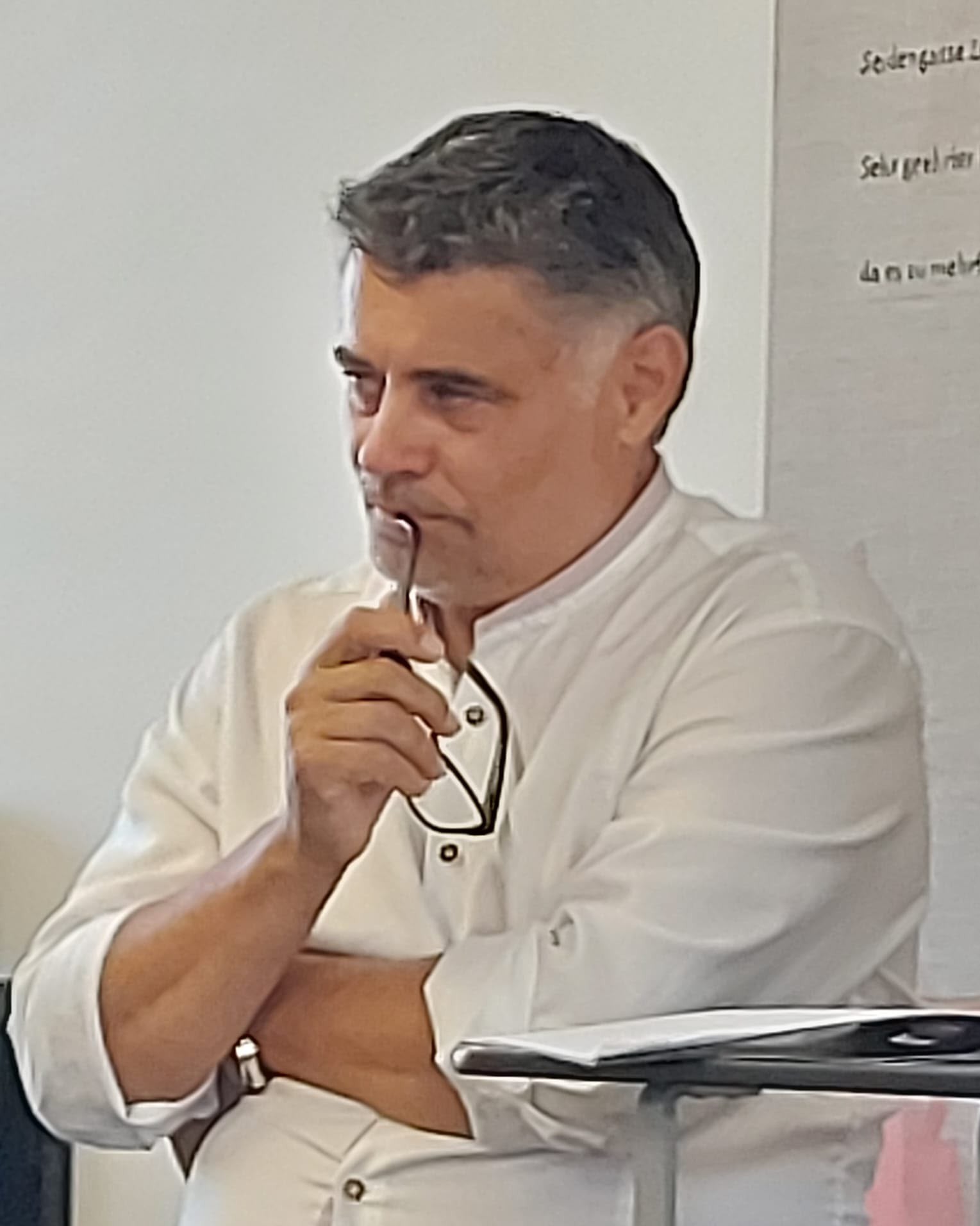
Mr. John Herzog, President of the Global Media Circle (GMC), speaks about the responsibility of journalism and the power of language in shaping how people see one another. (Photo: GMC)
The language we choose
WAJ: On the occasion of the International Day of Peace, as a journalist and an advocate for peace journalism, what does the “language of peace” mean to you in today’s media landscape?
Mr. John Herzog, President, Global Media Circle (GMC): For me, the language of peace begins with two things: education of the heart and genuine listening.
Peace is not created by words alone. It begins with the willingness to understand another person before judging them.
Journalism can play a vital role here. We do not only report on people. We shape how people see one another. That creates responsibility.
WAJ: You have spoken about the need for more peace journalists rather than simply more war reporters. What do you believe journalism can do differently to help societies understand peace, rather than only report on conflict?
Mr. John Herzog: We know the technical solutions for war.
We have them
We develop them
We use them
But on the level of communication, we still have many solutions to discover. And perhaps one of the greatest questions of our time is this: How can we live together — on this one planet Earth?
Journalism should not only document conflict. It should also create space for dialogue, understanding and possible solutions.
WAJ: Words can inform, but they can also divide, frighten or heal. In your view, what responsibility do journalists and media organizations have for the language they use when reporting on conflict, difference and social tensions?
Mr. John Herzog: What responsibility do journalists have for the language they use?
A word can become a weapon
A sentence can become an entire arsenal
A headline can generate fear
An image can destroy hope.
That is why every journalist should ask: Do I truly recognize the responsibility carried by my language and do I live by it?
Language is never neutral in its effect. It can divide. But it can also connect.
Journalism, youth and the bridges between us
WAJ: In an era of social media, artificial intelligence, misinformation and rapidly spreading information, how can journalists protect truth and public trust while still communicating in a way that brings people closer together?
Mr. John Herzog: How can journalists protect truth and public trust?
Speed must once again come after truth
The hunger for sensation should be replaced by a hunger for truth
We need a strong return to the principles of responsible journalism: to verify, to question, to listen, to reflect and to act with care.
A journalist’s code should not only be written down. It should be lived.
WAJ: You have worked with young people and have spoken about the relationship between youth, media and peace. What should young people learn about journalism and communication if they are to become not only media users, but also future voices for peace?
Mr. John Herzog: They should learn to ask their own questions. They should learn to tell their own stories. And they should be encouraged to describe their own vision of society. Young people should not only be consumers of media.
They should become active voices in shaping the future of communication. And we should take those voices seriously.
WAJ: You have also used music and cultural expression as bridges between people. What can journalism learn from music and culture about communicating across borders, languages and differences?
Mr. John Herzog: A song, an image or a story can build a bridge before a single argument has been exchanged.
That is something journalism can learn from. We can allow more emotion and more humanity without giving up accuracy. Culture often reaches people where debate no longer can. And sometimes that is where understanding begins.
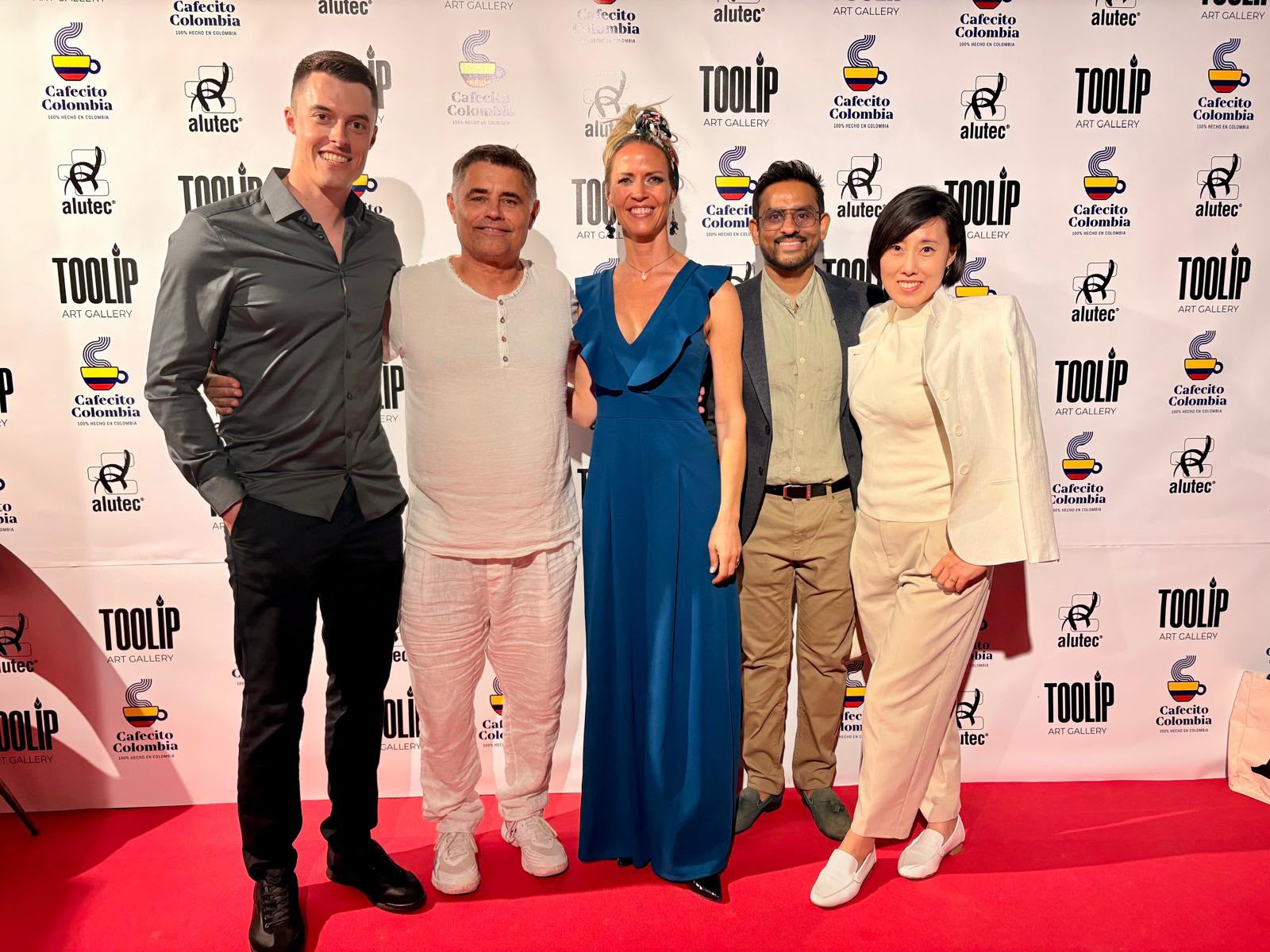
For John Herzog (second from left), journalism can learn from music and culture: “A song, an image or a story can build a bridge before a single argument has been exchanged.” (Photo: GMC)
Vienna, peace and the courage to listen
WAJ: Vienna is home to the United Nations, international organizations, diplomats, journalists and communities from many parts of the world. What unique role can Vienna play as a meeting place for dialogue and as a voice for peace?
Mr. John Herzog: Vienna brings together international organizations, diplomacy, science, culture, media and people from across the world.
That gives this city a unique opportunity. Vienna can be more than a geographical meeting point. It can become a true space for dialogue. A place where people do not only speak — but listen. A place where differences are not erased, but understood.
WAJ: After witnessing and participating in many international discussions on peace and communication, what is one misconception about peace that you believe the media should help society reconsider?
Mr. John Herzog: Perhaps we should stop talking about peace only when a peace agreement is signed.
And perhaps we should also challenge the simple idea that peace is merely the absence of war.
Peace is much more.
It is dignity
It is respect
It is education
It is dialogue
It is the daily decision to live together rather than against one another.
WAJ: On September 21, 2026, as Vienna brings together different initiatives and voices for peace, if you could ask every journalist in the world to change just one thing about the way they communicate, what would you ask them to do?
Mr. John Herzog: Listen first! Not only to the loudest voice. Not only to the most spectacular statement. Not only to what promises the most clicks.
Listen to the quieter voices. Listen to those who mediate. Listen to young people. Listen to those who build bridges. Listen to those who are searching for solutions.
Journalism has enormous power. And we should never forget: Our words do not only describe the world. Sometimes they change it.
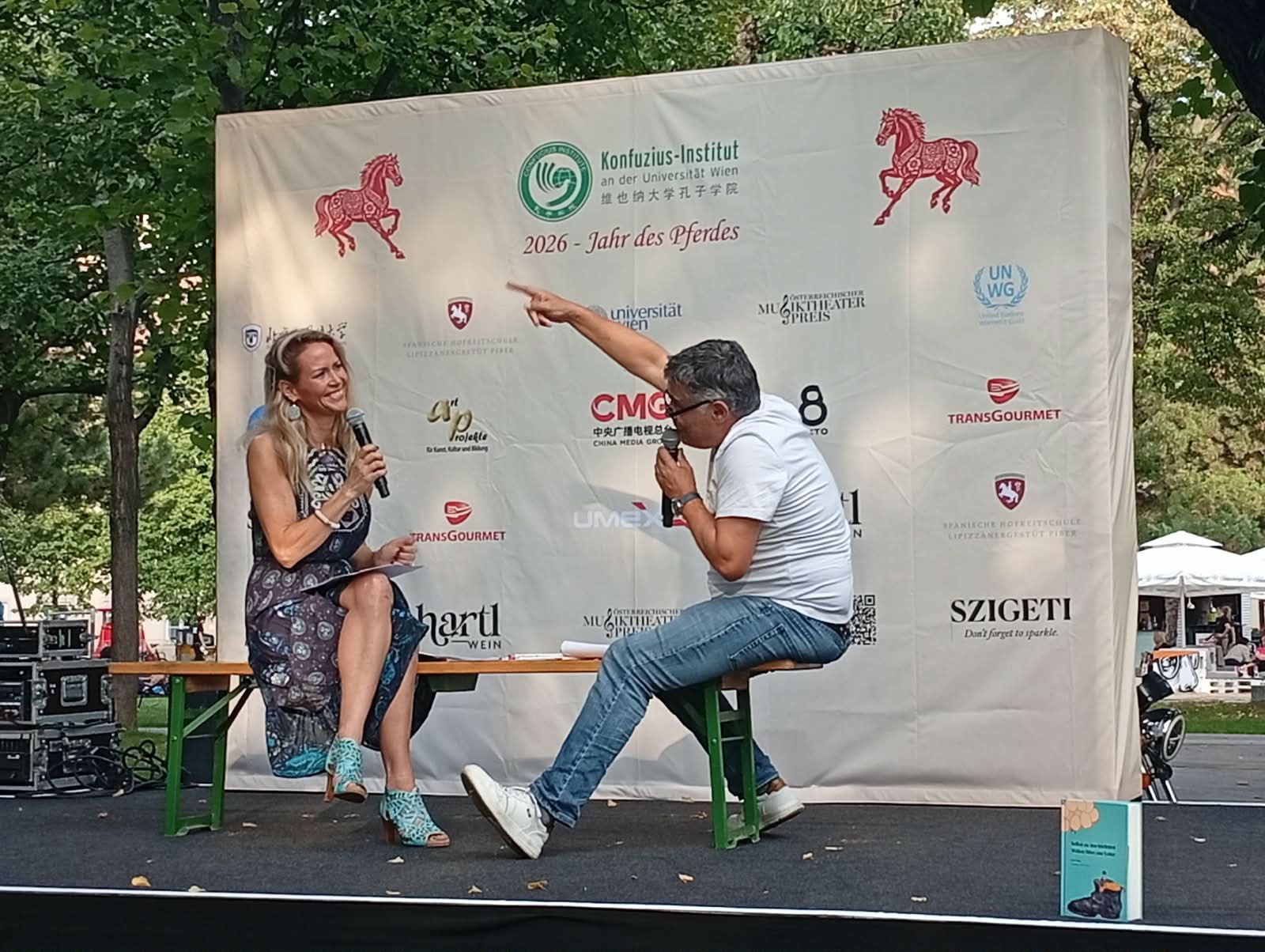
A hands-on session on the language of peace led by Mr. John Herzog (right) and a fellow speaker. (Photo: GMC)
#IamPEACE — a silent message from Vienna
On Monday, September 21, 2026, from 10:00 a.m. to 12:00 noon, Vienna’s Am Hof will become a visible symbol of peace. Around 1,000 people are expected to join the silent human chain #IamPEACE, including approximately 230 children from one Vienna primary school alone, with further school classes taking part.
Children and adults, people from different cultures and generations — hand in hand for peace.
As John Herzog describes it:
“Silence with 1,000
1,000 people
8 minutes of silence
One message meant to be heard”.
These lines take the place of a formal address.
WAJ sincerely thanks Mr. John Herzog, President of the Global Media Circle, for sharing his reflections on journalism, dialogue and the language of peace.
On the International Day of Peace, his message reminds us that the words we choose do more than describe the world — they can help shape the way we live together.
PROMOTED
The Mediterranean fruit fly, or medfly, one of the most damaging insect pests infesting fruits and vegetables, has been successfully eradicated in the Mexican state of Colima, Mexican authorities announced this week. Mexico used a nuclear-based technique known as the sterile insect technique (SIT) in collaboration with the International Atomic Energy Agency (IAEA) and the Food and Agricultural Organization of the United Nations (FAO) to eradicate the medfly.
WAJ

MOST VIEWED
-
1
Austria's Social Democratic Party wins Vienna mayoral election

-
2
A 17th-Generation Descendant of King Le Kinh Tong Brings the Hung Kings’ Statue to Be Enshrined Abroad

-
3
Vietnam Sustainability Forum 2023: Leveraging Culture and Heritage for Sustainable Tourism

-
4
HUNG KING’S DEATH ANNIVERSARY AND HONORING GLOBAL VIETNAMESE DESCENDANTS 2024

-
5
The Prince (Dover Thrift Editions)

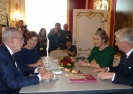
The two Kings Philippe and Van der Bellen havedifferent backgrounds, one is of royal origin, and the other is a child of a refugee family (once of noble origin) but now, in the eyes of the European public, both of them are giving off a sense of courtesy, virtue and erudition.
WAJ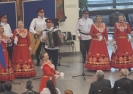
With the attendance of many international figures, the 80th anniversary of the end of World War II was celebrated at the United Nations headquarters.
Journalist Usama Soliman
Comment