





Dr. Phan Van Kien, Director, Institute of Journalism and Communication Training, University of Social Sciences and Humanities, Vietnam National University, Hanoi. (Photo: USSH)
Cultural Space, Institutional Symbolism, and Media Impact
WAJ: Dr. Phan Van Kien, from the perspective of a journalism and communications scholar, how do you assess the exhibition “Friendship Connected by Light – Stories of Two Nations Under the Big Dipper” in terms of its communicative value and its capacity to resonate with and reach audiences in South Korea and beyond?
Dr. Phan Van Kien: From an academic perspective in journalism and communications, the exhibition “Friendship Connected by Light – Stories of Two Nations Under the Big Dipper” constitutes a cultural communication initiative with a particularly notable transnational impact.
One of its most significant features lies in its venue: the lobby of the National Assembly of the Republic of Korea, a space that symbolizes political authority, institutional legitimacy, and democratic governance. The presence of Vietnamese art within this setting conveys not only cultural expression, but also a form of mutual institutional recognition and respect.
In communication terms, the exhibition generated a multi-layered effect. The first layer involved direct engagement with South Korean legislators, scholars, and policy stakeholders. The second layer extended to broader public dissemination through mainstream media, digital platforms, and the Vietnamese diaspora in South Korea.
Coverage by major media outlets in both Vietnam and South Korea positioned the exhibition as a focal point of communicative convergence, where art, historical narrative, and cultural diplomacy intersect. This form of impact is sustainable, as it is grounded in emotional resonance and experiential engagement rather than unilateral information transmission.
WAJ: The exhibition coincided with the 135th anniversary of President Hồ Chí Minh’s birth and the 33rd anniversary of diplomatic relations between Vietnam and South Korea. In your view, what symbolic and external communication significance does the presentation of President Hồ Chí Minh’s image and thought within the South Korean National Assembly hold?
Dr. Phan Van Kien: The presentation of President Hồ Chí Minh’s image and thought within the National Assembly of the Republic of Korea carries profound symbolic significance. It transcends the scope of an art exhibition and functions as a highly emblematic act of external communication. President Hồ Chí Minh is framed not as a rigid political symbol, but as a humanistic leader representing aspirations for independence, peace, and national reconciliation - values that possess universal relevance.
Within the dual commemorative context of the 135th anniversary of his birth and the 33rd anniversary of Vietnam–South Korea diplomatic relations, the exhibition contributes to shaping Vietnam’s image in the public consciousness of South Korea as a nation with deep historical continuity and a leader respected not only domestically but also within the broader Asian context. From the standpoint of public diplomacy, this represents a refined and effective approach to narrating national identity through the symbolic capital of a historical figure.
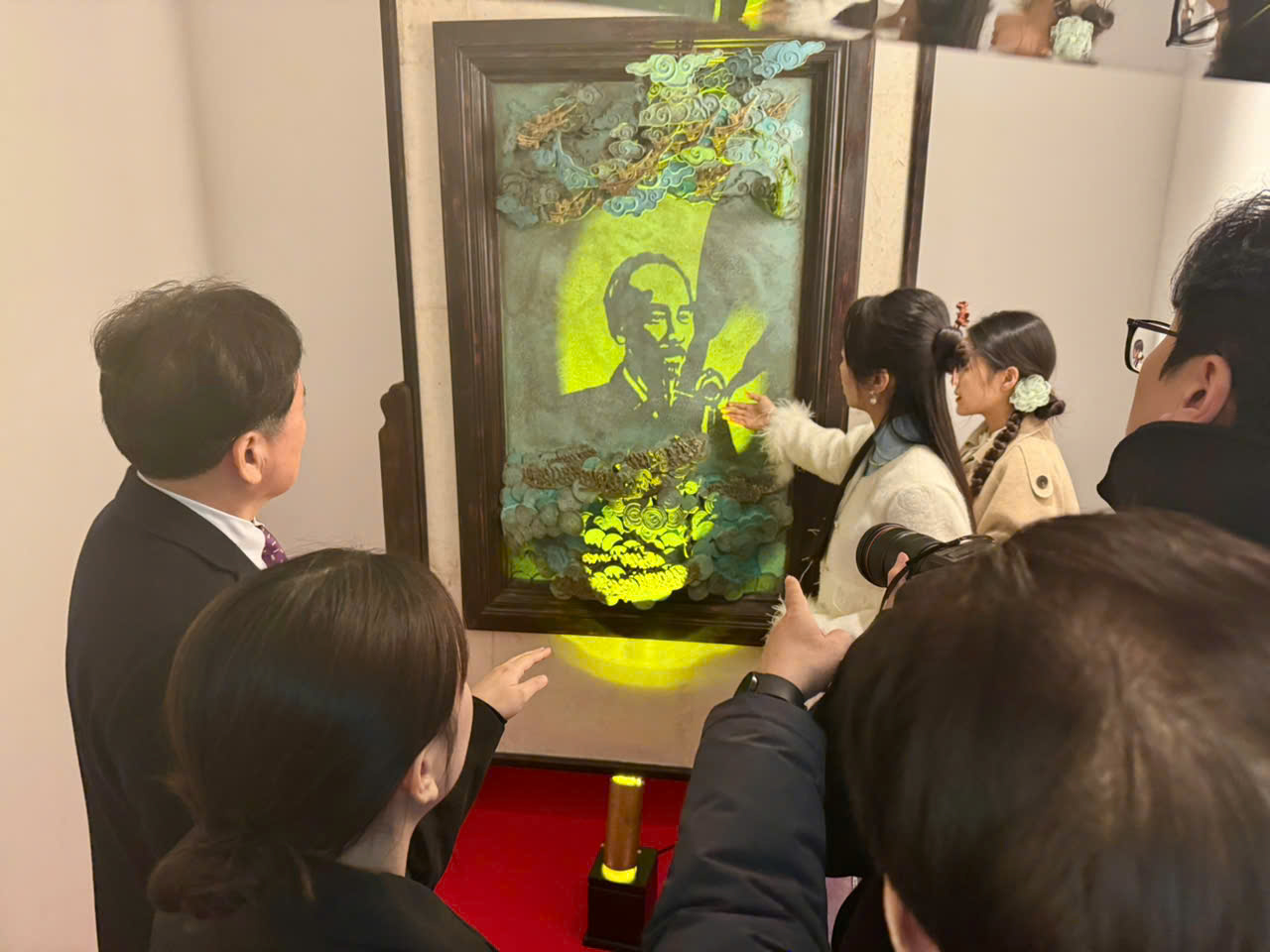
Light sculpture of President Ho Chi Minh of Vietnam at the exhibition “Friendship Connected by Light – Stories of Two Nations Under the Big Dipper” at the National Assembly of Korea. (Photo: KOVECA)
Artistic Language, Empathy, and Audience Reception
WAJ: The light sculptures tell historical stories through the language of art rather than political discourse. From a scholar’s perspective on contemporary communication, how do you assess the effectiveness of this form of storytelling in fostering emotional resonance and long-term memory among international audiences?
Dr. Phan Van Kien: In contemporary communication theory, particularly within the field of international communication, narratives that achieve long-term retention are typically those that engage audiences at an emotional and experiential level. The light sculptures in this exhibition effectively accomplish this by employing light as a non-verbal narrative medium, capable of transcending linguistic, cultural, and ideological boundaries.
By moving away from explicit political discourse, light-based art creates interpretive openness, allowing audiences to construct meaning independently and to relate Vietnam’s historical experience to their own personal and collective memories. This approach is especially appropriate for international audiences, who may possess limited prior familiarity with Vietnamese history. From a communication perspective, it is a mode of storytelling characterized by high mnemonic value, deep empathy, and enduring transnational resonance.
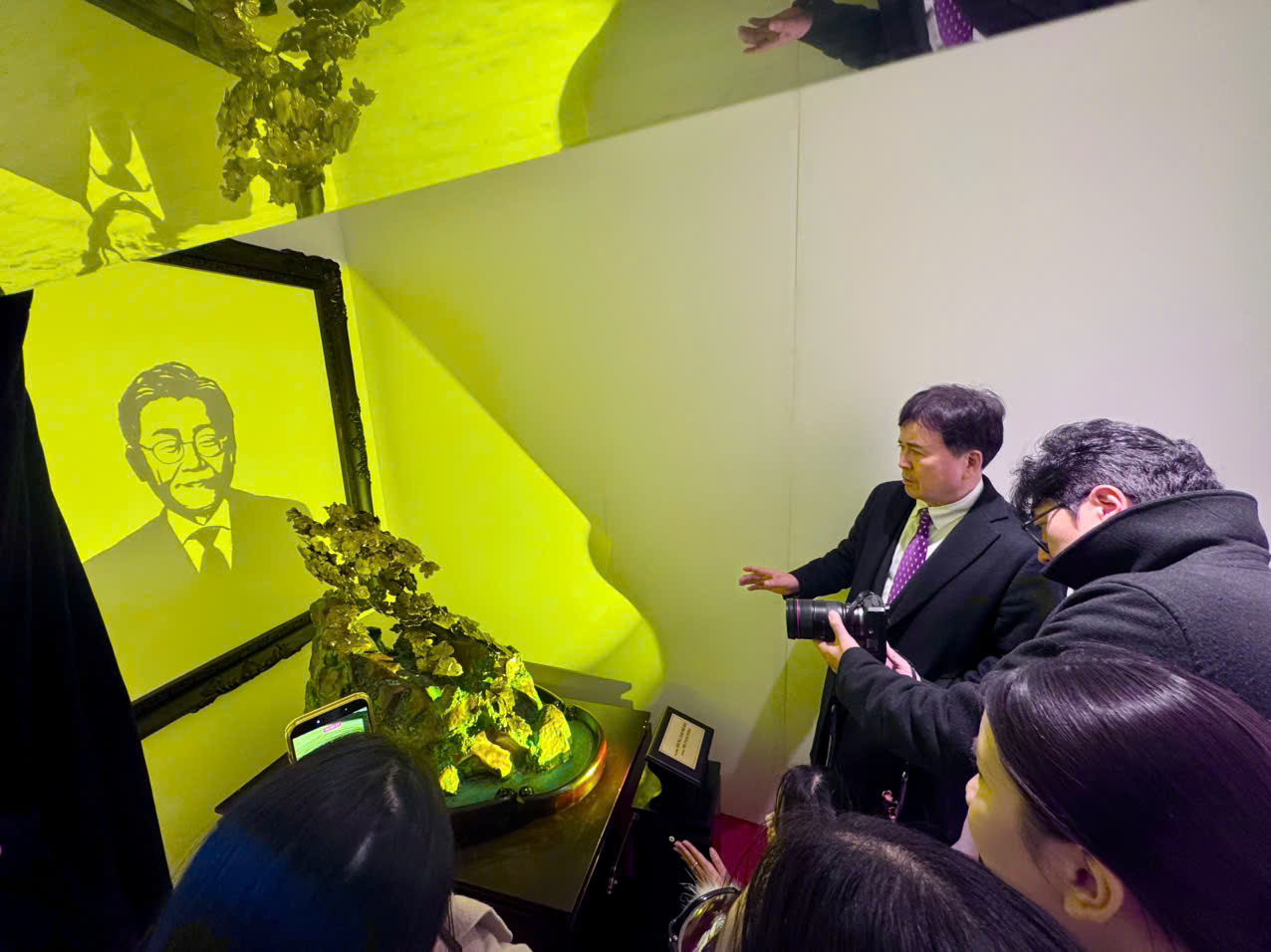
A portrait of South Korean President Lee Jae Myung crafted in light by an artist at the exhibition. (Photo: KOVECA)
WAJ: Based on your observation of the responses from lawmakers, scholars, and the Korean public at the exhibition, which factors do you believe contributed to the positive and relatable reception of President Ho Chi Minh’s image and Vietnamese culture?
Dr. Phan Van Kien: Based on observed responses from South Korean lawmakers, scholars, and members of the public, three primary factors can be identified.
First, the humanistic and universal dimensions associated with President Hồ Chí Minh - particularly his association with peace, national unity, and tolerance - resonate strongly with South Korea’s own historical experience.
Second, the contemporary mode of artistic presentation, involving collaboration between Vietnamese and South Korean artists, situates Vietnamese culture within a framework of creative dialogue rather than cultural distance.
Third, the formal yet open nature of the exhibition space enabled audiences to engage naturally and without prescriptive interpretation. Collectively, these factors contributed to a positive reception and a sense of genuine affinity.
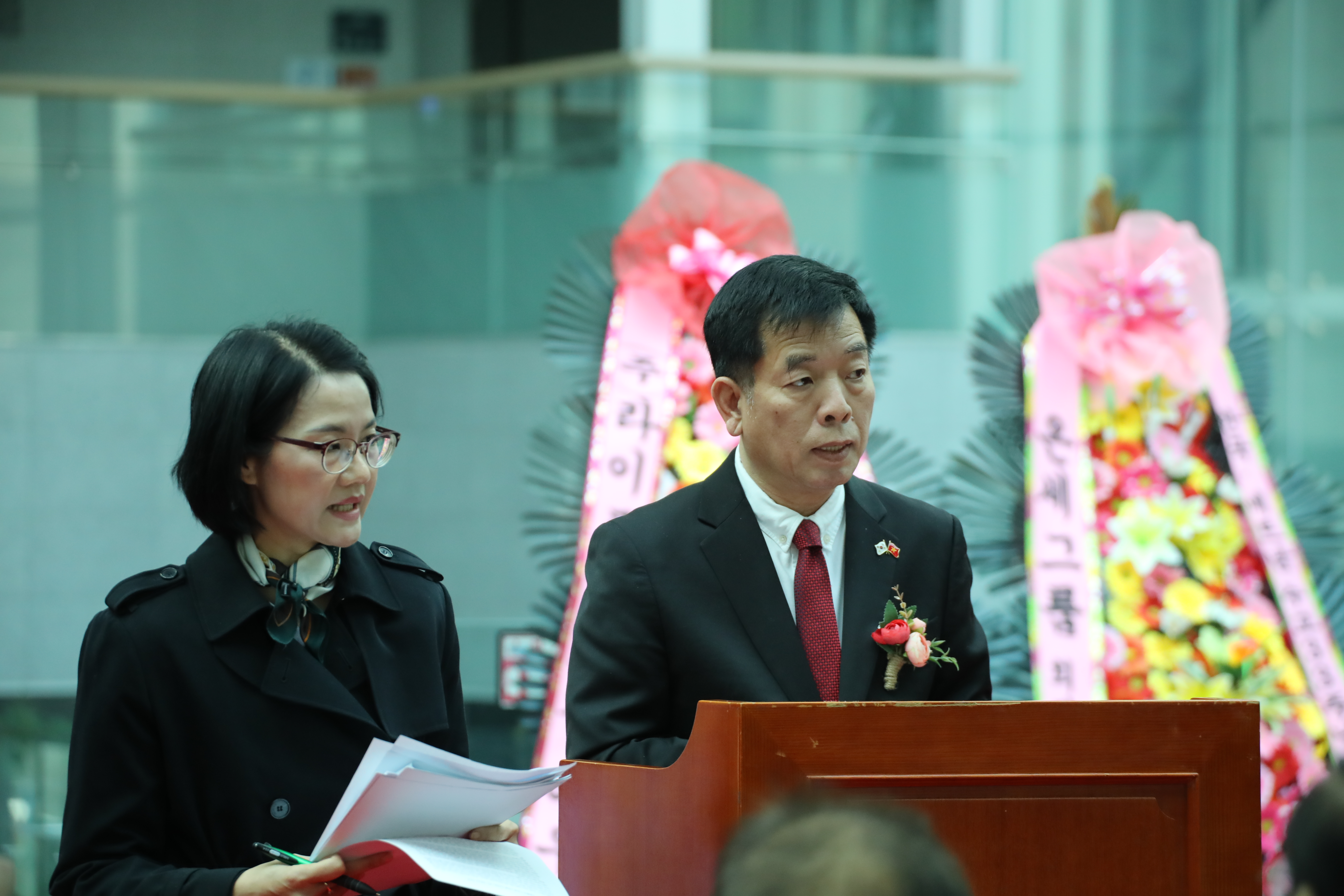
Vietnamese Ambassador to South Korea, Mr Vu Ho, speaks at the “Friendship Connected by Light – Stories of Two Nations Under the Big Dipper” exhibition at the National Assembly of South Korea. (Photo: KOVECA)
External Communication Strategies and the Role of Memory
WAJ: At a time when international communication is heavily shaped by digital technology and social media, how do you see in-person, experiential cultural events such as this exhibition complementing Viet Nam’s public and cultural diplomacy efforts?
Dr. Phan Van Kien: In the digital era, information circulates rapidly but often lacks durability. Experiential cultural events such as this exhibition function as emotional and symbolic anchors, providing depth and stability to external communication efforts.
The exhibition generated high-quality primary content that could subsequently be amplified through both traditional media and digital platforms. In this sense, direct experiential communication and digital dissemination are complementary rather than oppositional: lived experience supplies interpretive depth, while digital technologies extend reach and visibility.
Although the 21st century is defined by technological innovation, artificial intelligence, and rapid social transformation, humanistic, cultural, and artistic values - embodied here through the metaphor of light - remain essential guiding principles for fostering trust and sustaining peace in international relations.
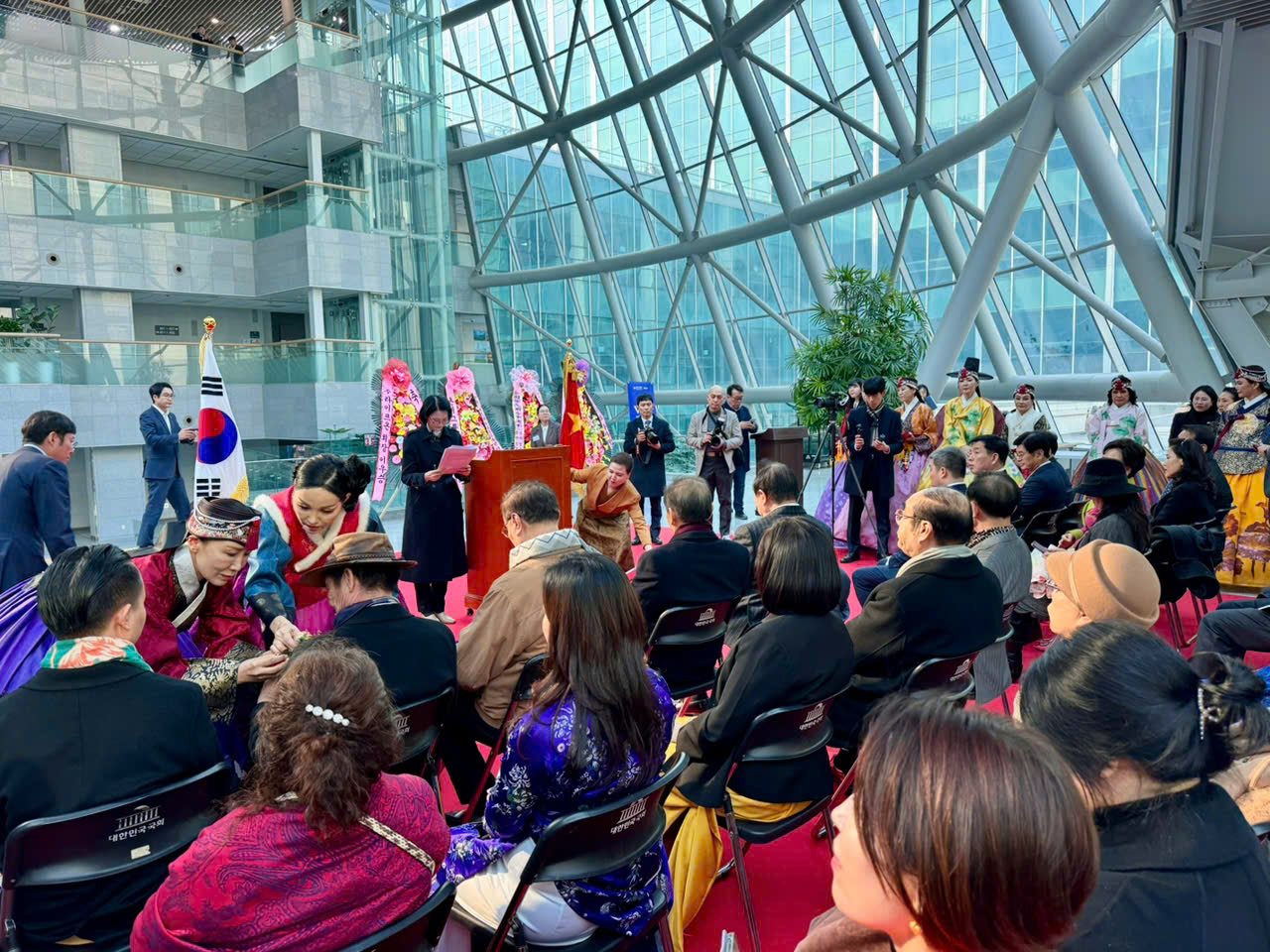
Hundreds of Vietnamese and Korean visitors attend the exhibition. (Photo: KOVECA)
WAJ: What would you hope to see if the exhibition “Friendship Connected by Light – Stories of Two Nations Under the Big Dipper” were to continue and be held at the National Assembly of Viet Nam in the near future - particularly in terms of how Viet Nam’s story is told to the world?
Dr. Phan Van Kien: If the exhibition were continued and held at the National Assembly of Vietnam, I would expect it to evolve into a genuinely reciprocal dialogue. Such an initiative would not only present Vietnam’s narrative to the world, but also demonstrate Vietnam’s capacity to listen to and respectfully engage with its international partners.
From a communication perspective, this would affirm Vietnam’s ability to articulate national identity through contemporary artistic language, addressing global audiences beyond the confines of traditional political discourse.
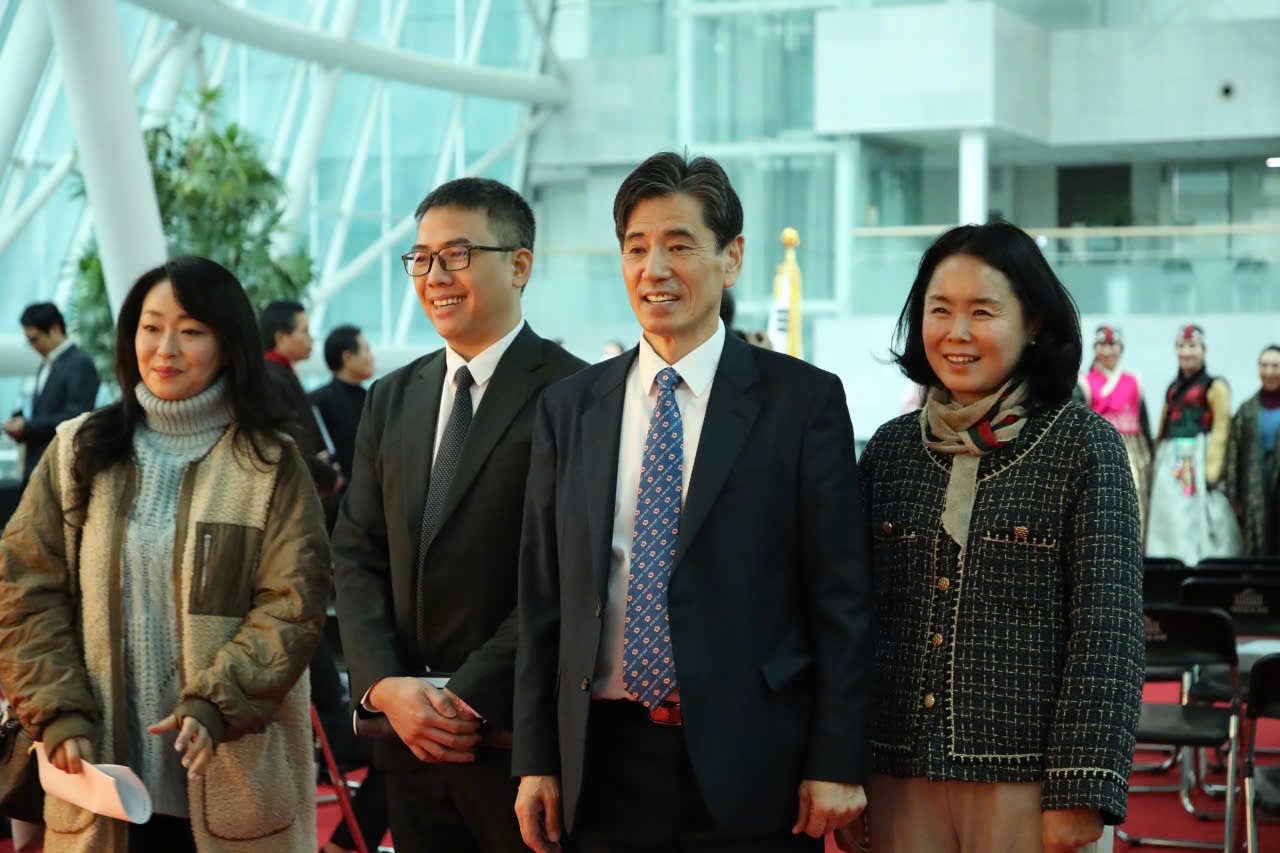
Dr. Phan Van Kien (second from left) and Koveca Chairman Kwon Sung Taek (second from right) – Bridges of Korea-Vietnam friendship. (Photo: KOVECA)
WAJ: Finally, as a journalism and communications scholar, what message would you like to share with young journalists in Viet Nam and South Korea about the role of journalism, art, and historical memory in fostering mutual understanding between nations?
Dr. Phan Van Kien: I would like to convey to young journalists that journalism, art, and historical memory are intrinsically interconnected. Journalists are not merely transmitters of information; they are custodians of collective memory and facilitators of intercultural understanding.
In a world marked by fragmentation and division, narratives grounded in historical respect, emotional depth, and creative responsibility possess the greatest capacity for reconciliation. This exhibition offers a compelling illustration of that role within the domain of cultural communication.
PROMOTED

Opened by Vietnamese Prime Minister Phạm Minh Chính, the Vietnam Golden Autumn Fair 2025 in Hanoi — Southeast Asia’s largest trade and cultural event — takes place from October 26 to November 4, featuring over 3,000 booths from 25 countries and welcoming 500,000 visitors daily.
WAJ

MOST VIEWED
-
1
Assoc.Prof.Nguyen Thi Hoe, whose ultimate desire/final wish is to serve society as much as possible

-
2
Respiratory Medicine Congress in Vienna warns of long-term exposure to air pollution and lack of green spaces

-
3
UN Office for Outer Space Affairs and United Kingdom strengthen cooperation on space sustainability

-
4
Shape-line and social responsibility

-
5
The language of peace — from vienna to the world

The two Kings Philippe and Van der Bellen havedifferent backgrounds, one is of royal origin, and the other is a child of a refugee family (once of noble origin) but now, in the eyes of the European public, both of them are giving off a sense of courtesy, virtue and erudition.
WAJ
With the attendance of many international figures, the 80th anniversary of the end of World War II was celebrated at the United Nations headquarters.
Journalist Usama Soliman
Comment