




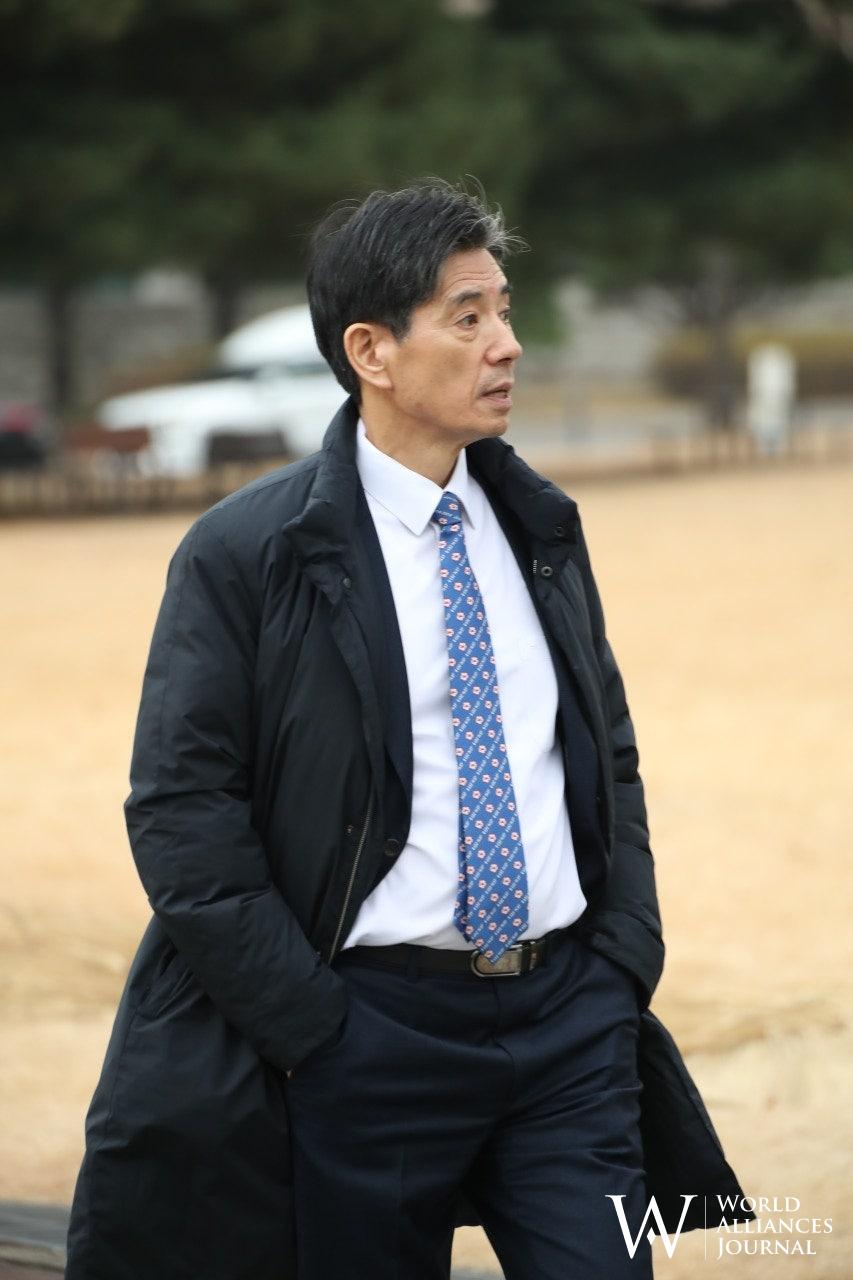
Dr. Kwon Sung-Taek, Chairman and CEO of the Korea–Vietnam Economic and Cultural Association (KOVECA). (Photo: KOVECA)
History, Leadership, and a Moment That Calls for Reflection
WAJ: The exhibition “Friendship Connected by Light – Stories of Two Nations Under the Big Dipper” was held on the occasion of the 135th anniversary of President Ho Chi Minh’s birth and the 33rd anniversary of Vietnam–Korea diplomatic relations. In your view, what is the most important message the exhibition seeks to convey to audiences in both countries?
Dr. Kwon Sung Taek: In Vietnam, President Ho Chi Minh is widely regarded as the figure who represents the nation’s modern history. In this sense, to truly understand President Ho Chi Minh is to properly understand modern Vietnamese history itself.
At a time marking the 33rd anniversary of diplomatic relations between Korea and Vietnam - when the relationship between the two countries needs to expand beyond economic cooperation into all areas - it was both timely and meaningful to foster deeper interest in and understanding of President Ho Chi Minh on the occasion of the 135th anniversary of his birth.
Moreover, although a new government was inaugurated in Korea this past June, the country continues to face severe social and political polarization, with “national unity” emerging as a pressing challenge of our time. In such circumstances, the leadership of President Ho Chi Minh, who unified Vietnam despite its complex history and culture, offers a powerful message not only to Korean political leaders but also to the general public.
For these reasons, we believed that this endeavor was both necessary and meaningful for strengthening the close and comprehensive relationship between Korea and Vietnam.
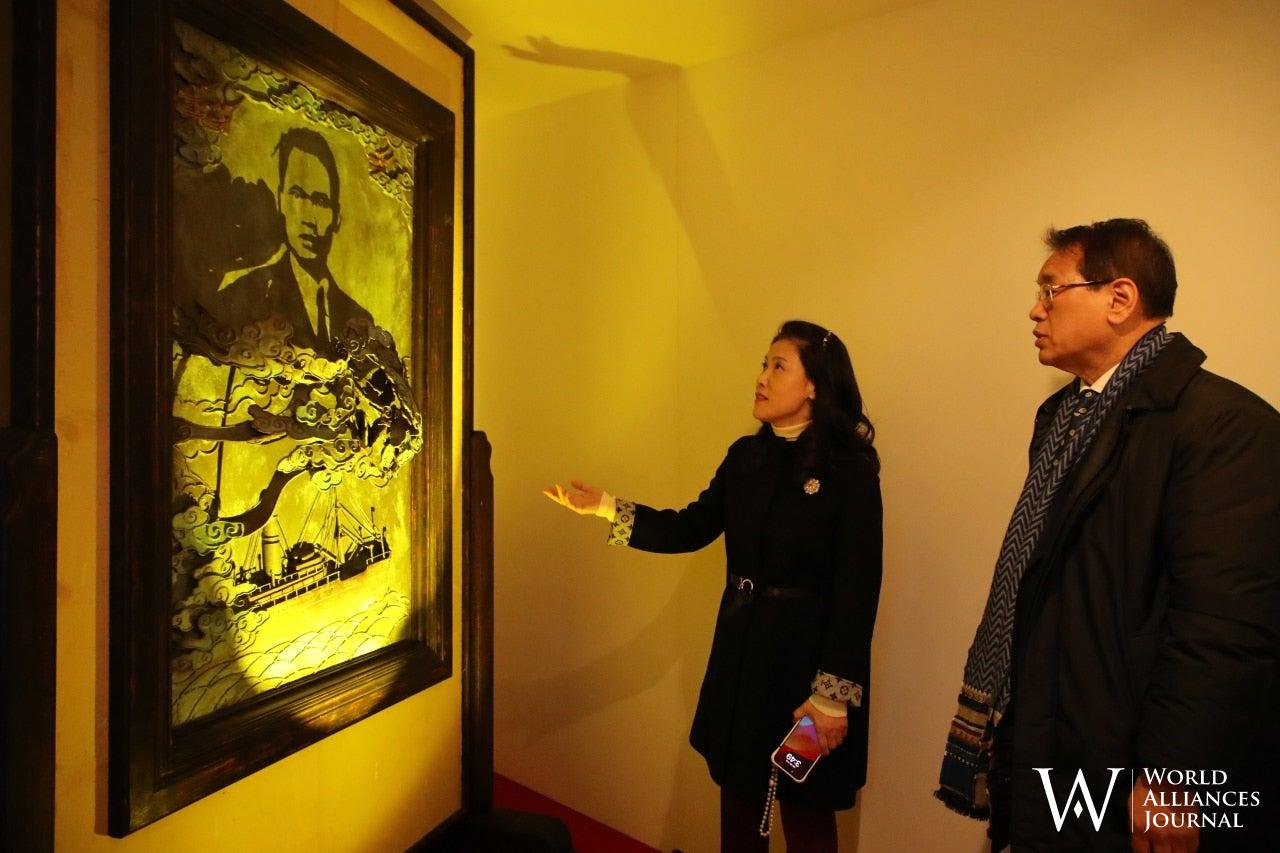
Portrait of a young President Ho Chi Minh (Vietnam), depicted by the artist using light art at the exhibition. (Photo: KOVECA)
Why the National Assembly—and Why Light
WAJ: What significance does the choice of the National Assembly of the Republic of Korea—an emblem of democracy and parliamentary life—hold as the venue for an exhibition dedicated to President Ho Chi Minh, within KOVECA’s approach to public diplomacy?
Dr. Kwon Sung Taek: The National Assembly Building of Korea is widely used as a space where important discourses of Korean society are discussed and public messages are conveyed. As the hall that embodies the will of the people and represents Korea and its citizens, it carries great authority.
In relation to President Ho Chi Minh, KOVECA previously hosted the “Seminar Commemorating the 130th Anniversary of President Ho Chi Minh’s Birth” in 2020 together with Song Young-gil, who at the time served as Chair of the National Assembly’s Foreign Affairs and Unification Committee. The seminar was originally scheduled to be held at the National Assembly but was conducted online due to the COVID-19 pandemic.
Choosing the National Assembly as the venue and involving prominent political leaders reflects an intention to convey more broadly and more profoundly the historical significance and universal values that President Ho Chi Minh represents in both world history and human history.
WAJ: Rather than relying on political discourse, the exhibition tells a historical story through light sculpture. Why, in your opinion, do light and art have the power to foster deeper empathy and understanding between nations?
Dr. Kwon Sung Taek: The Lee Jae-myung administration, inaugurated on June 3, 2025, is often described as a government born of the “Revolution of Light.” During the process of overcoming the declaration of martial law that shook Korean society in December 2024, citizens adopted light sticks as symbols of solidarity and protest.
I first encountered the works of artist Bui Van Tu in November 2024, and upon seeing how he expressed historical figures and narratives through light, I immediately proposed an exhibition in Korea centered on President Ho Chi Minh. As Korean society experienced what became known as the Revolution of Light, I became even more convinced of the necessity of this exhibition. I believe that through the power of art, we can strengthen the messages we wish to convey and further deepen solidarity between nations.

Opening ceremony of the exhibition “Friendship Connected by Light – Stories of Two Nations Under the Big Dipper” at the National Assembly of the Republic of Korea headquarters, Seoul. (Photo: KOVECA)
WAJ: The collaboration between Vietnamese light sculptor Bui Van Tu and Korean artist Moon-E created a cross-cultural artistic structure. How do you assess the role of bilateral artistic collaboration in retelling history through a contemporary language?
Dr. Kwon Sung Taek: The essence of Bui Van Tu’s work lies in light itself. To illuminate that light, an indoor structure capable of reflecting it is essential. However, the third-floor lobby of the National Assembly Members’ Office Building in Korea—where we were to hold the event—is enclosed on all sides, including the ceiling, with glass, making it an unsuitable space for reflecting light.
Under these circumstances, an artist Moon-E exercised creative imagination and proposed constructing an indoor structure in which seven artworks would be arranged in the shape of the Big Dipper. This became a compelling example of artists from two countries collaborating around a single theme to produce a meaningful outcome.
In particular, the chosen theme, “Friendship Linked by Light: Two Countries’ Stories under the Big Dipper,” can be seen as expressing friendship, solidarity, and a future-oriented partnership—symbolizing a shared destiny in which two nations stand under the same sky, look in the same direction, and illuminate one another.
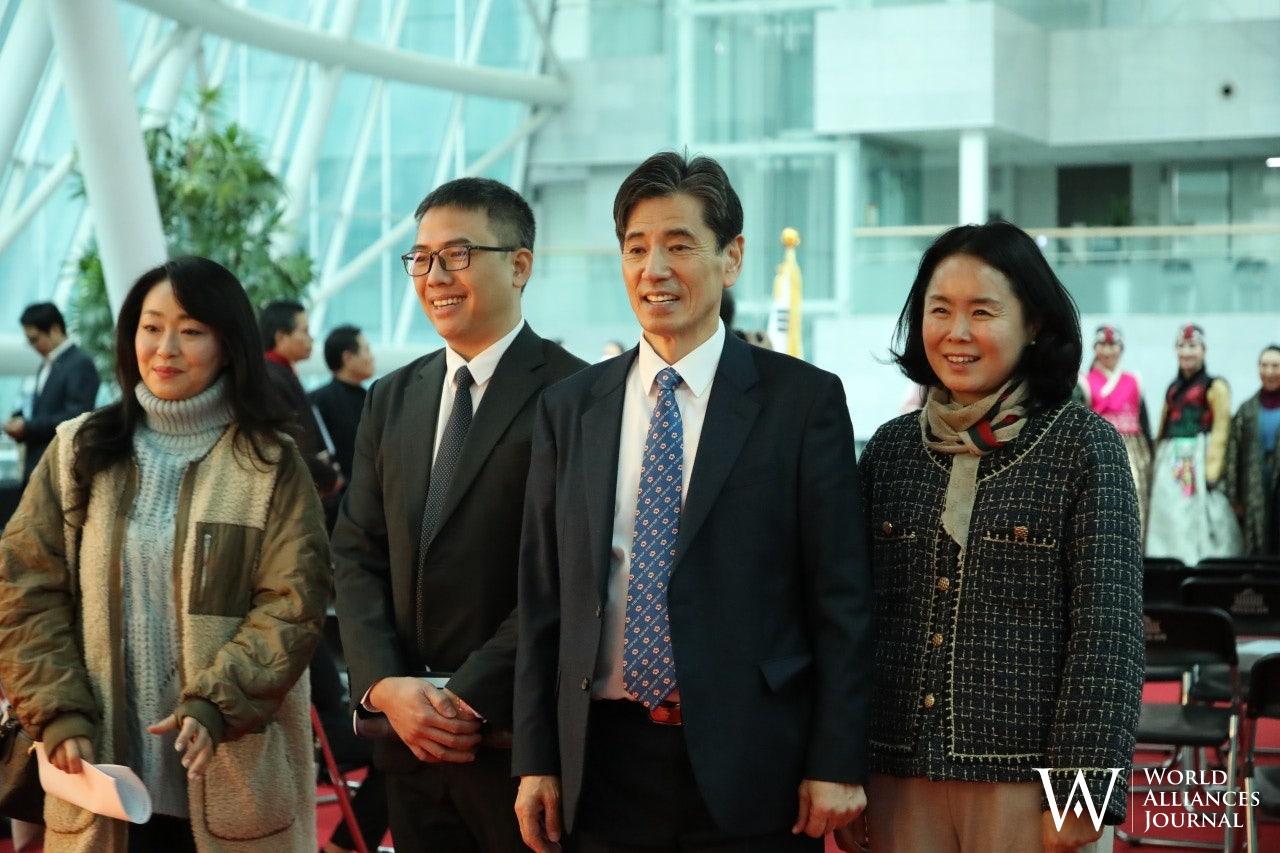
Chairman Kwon Sung-Taek (second from right) with international guests attending the exhibition. (Photo: KOVECA)
From a Symbolic Event to a Sustainable Cultural Platform
WAJ: After three days of exhibition at the National Assembly, what did the responses from Korean lawmakers, the Korean public, and the Vietnamese community in Korea reveal to you about the exhibition’s reach and social impact?
Dr. Kwon Sung Taek: Prior to the event, several major Korean media outlets published introductory articles about the exhibition. Given that the venue was the National Assembly Members’ Office Building and that the Korea–Vietnam Parliamentary Friendship Association participated as a co-host, many parliamentary leaders attended or sent congratulatory messages.
Unfortunately, because the event was held on a weekday, attendance from the Vietnamese community was lower than hoped. Nevertheless, Vietnamese residents traveled from Busan, Ulsan, Mokpo, and even Jeju Island to attend. We believe that through their presence, the exhibition’s message was meaningfully delivered.
WAJ: KOVECA is often described as a bridge between cultural diplomacy and everyday social life. From your perspective, how has this exhibition helped narrow cultural or social gaps between Vietnam and South Korea in a tangible way?
Dr. Kwon Sung Taek: Some people tend to interpret the relationship between Korea and Vietnam solely in terms of economic interests. However, the Korea–Vietnam relationship is grounded in a historical and cultural partnership that goes far beyond economic cooperation.
Holding an exhibition centered on President Ho Chi Minh - especially at Korea’s National Assembly - stands as a powerful demonstration of the strong mutual trust and enduring partnership between the two nations.
WAJ: There have been suggestions that the exhibition should be continued at the National Assembly of Vietnam. Could you share the orientation, tentative timeline, and core spirit envisioned for the exhibition in a Vietnamese parliamentary setting?
Dr. Kwon Sung Taek: Considering the meaning and intent of this exhibition in Korea, it is only natural to hope that it will continue on to Vietnam. If the exhibition were to be held at the Vietnamese National Assembly under similar conditions, it would no longer be a one-time symbolic event but a meaningful cultural platform.
The core works by artist Bui Van Tu were previously presented at the Vietnamese National Assembly and received high praise from parliamentary leaders, giving us strong grounds for optimism.
WAJ: In preparing for a potential exhibition in Vietnam, which Vietnamese partners does KOVECA plan to work with, and in your view, what partnership model will be decisive in ensuring the project’s depth and long-term sustainability?
Dr. Kwon Sung Taek: At the summit held last August between the leaders of the two countries, both sides agreed to cooperate in promoting exchanges, publicity, and media activities in the fields of culture, sports, and tourism, and to hold various cultural events such as reciprocal exhibitions and performances. In this context, the two countries have clearly positioned cultural cooperation as a key agenda for revitalizing bilateral relations.
Accordingly, the Vietnam-related cultural events hosted by KOVECA aim to evolve from one-off occasions into a sustainable and structured platform for cooperation, grounded in historical value and built upon the trust accumulated through 15 years of people-to-people diplomacy. In this regard, we hope to establish partnerships that are well aligned with this long-term vision.
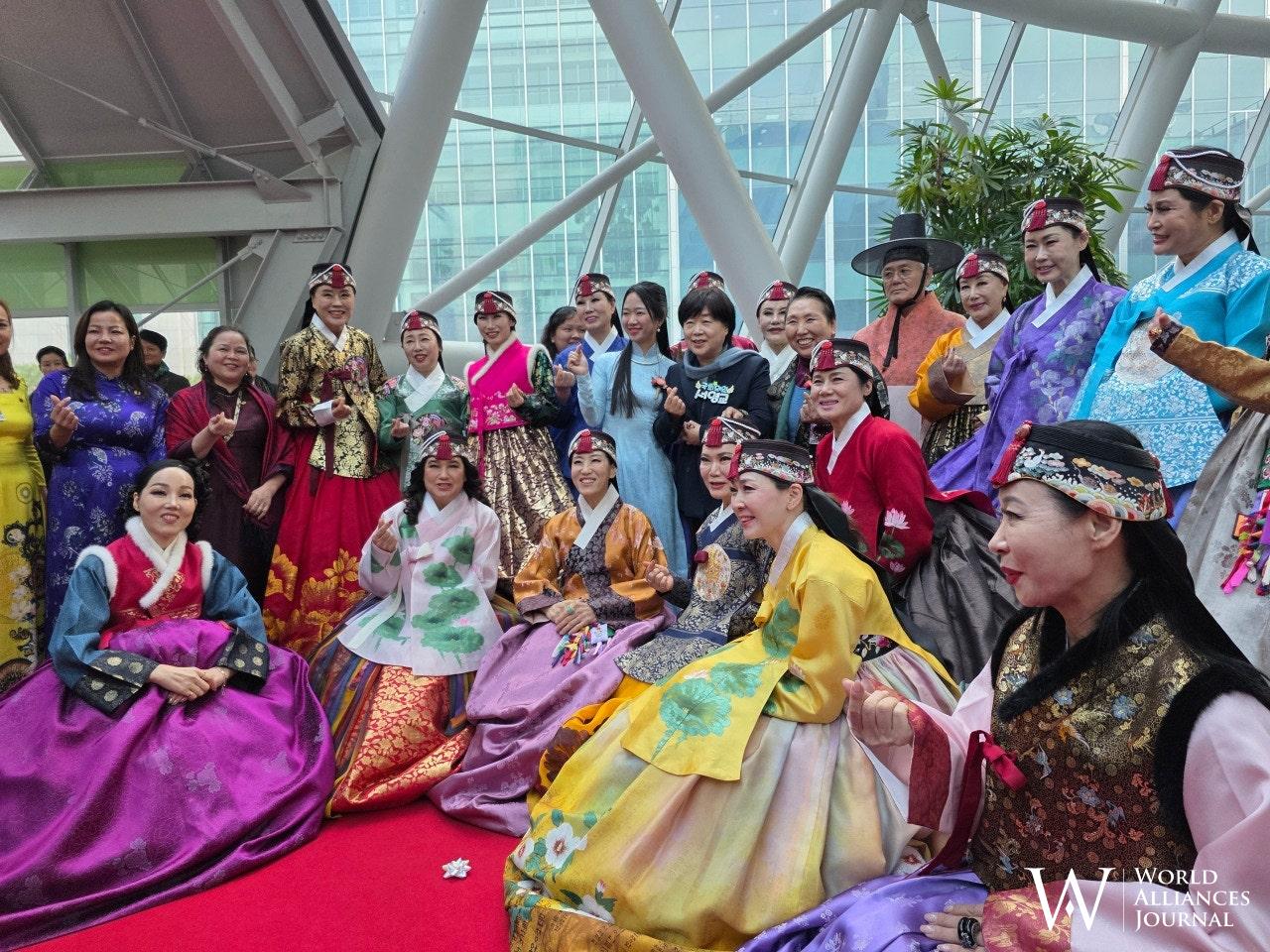
The exhibition highlights how art and historical memory connect Vietnam and Korea. (Photo: KOVECA)
WAJ: Looking beyond a single cultural event, what do you hope will be the most enduring legacy of this exhibition for Vietnam–Korea relations, particularly for younger generations?
Dr. Kwon Sung Taek: The sustainability of bilateral relations ultimately depends on how they are embraced by future generations. At present, however, there are few substantive programs dedicated specifically to youth exchanges.
We hope that this exhibition can serve as a meaningful starting point for such initiatives, helping to build a strong human foundation for Vietnam–Korea relations.
WAJ: We sincerely thank you,
PROMOTED
VIENNA, 18 November 2022 – OSCE Representative on Freedom of the Media Teresa Ribeiro payed an official visit to Hungary from 15 to 16 November 2022, during which she met with several government officials.
WAJ
- Young translator conquers the ancient Greek classic Anabasis – Memoir of the Persian Expedition
- Austria news - Usama Nosshy channel covers Asean's 55th anniversary celebrations at the United Nations in Vienna
- VietnamPlus Newspaper reported about ASEAN's 55th anniversary at the United Nations in Vienna

MOST VIEWED


The two Kings Philippe and Van der Bellen havedifferent backgrounds, one is of royal origin, and the other is a child of a refugee family (once of noble origin) but now, in the eyes of the European public, both of them are giving off a sense of courtesy, virtue and erudition.
WAJ
With the attendance of many international figures, the 80th anniversary of the end of World War II was celebrated at the United Nations headquarters.
Journalist Usama Soliman
Comment