





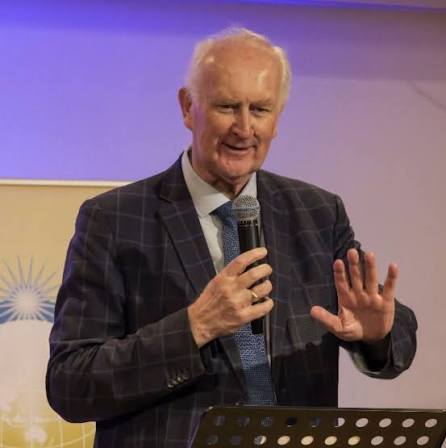
Peter Haider, President of the Universal Peace Federation (UPF) Austria. (Photo: UPF)
Overcoming mistrust, building trust
WAJ: On the occasion of the International Day of Peace — September 21, 2026, after decades of working for peace and interreligious dialogue, what do you believe is the deepest foundation that enables people to truly live in peace with one another?
Mr. Peter Haider, President of Universal Peace Federation (UPF) Austria: We have to overcome mistrust! Trust cannot be created by declarations alone. It grows through experience. It deepens when people feel respected, heard and valued, and when they have meaningful opportunities to cooperate in addressing the needs of the communities where they live.
Peace, therefore, is not only the responsibility of governments and international institutions. It is something in which all people can invest, everywhere and every day, beginning within the family, extending into the community and the nation, and ultimately contributing to a more peaceful world. And we have to go back to the roots as stated by the co-founder of the Universal Peace Federation Dr. Hak Ja Han in 2015 during a conference in the UN in Vienna: “The efforts of the United Nations during the seventy years after its founding did not result in a world of harmony and freedom only. We must know the truth: There is a limit to human thought and action. Man is also part of the creation. This implies that there is a creator. Hence, we must know God’s ideal for his creation.”
WAJ: You have devoted many years to promoting dialogue among different religions and cultures. In your view, how can religion become a “language of peace” rather than a dividing line between people?
Mr. Peter Haider: Religions often teach compassion, hospitality, humility, charity, and respect. Focusing on these common principles can create a basis for cooperation. People should have opportunities to meet believers from other traditions and hear how they understand their own faith. A person can be deeply committed to his own religion while perceiving another person's beliefs as an enrichment. We have to practice humility. Religious communities can acknowledge that they may not fully understand another tradition — disagreement might also create curiosity. Concepts such as forgiveness, mercy, peacemaking, and the sanctity of human life can be made central rather than peripheral. Interfaith groups can work together on poverty, refugees, environmental protection, discrimination, or humanitarian relief.
WAJ: You have spoken about the idea of “disarming words” as a way of contributing to the disarmament of the world. In an age of mass media and social networks, how do you think we need to change the way we speak to one another so that words can become instruments for building peace?
Mr. Peter Haider: In an age of mass media and social networks, “disarming words” can be understood as a form of nonviolent action. Words can intensify fear, hatred, and division, but they can also lower tensions, restore dignity, and create space for dialogue. Before weapons are used, people are often armed with narratives. Repeated language of humiliation and fear can make violence appear necessary or even inevitable. To “disarm” our words therefore means consciously refusing language that prepares people for violence: listening before responding; acknowledging the suffering of people on all sides; using language that leaves room for reconciliation rather than demanding permanent hostility. Disarmament therefore requires a transformation of the stories people tell about one another. In this sense, peace begins partly in vocabulary. A word cannot stop a missile by itself, but words can influence whether people see a missile as necessary, justified, or unthinkable.
WAJ: You have organized hundreds of forums, conferences and cultural events in Vienna, including many programmes at the United Nations. Through these encounters, what have you learned about what enables people of different religions, nationalities and perspectives to truly sit together and listen to one another?
Mr. Peter Haider: Dignity: each person is treated as more than a representative of a group or ideology. Curiosity before judgment: asking “What makes you see it this way?” rather than immediately preparing a rebuttal. A shared purpose: people listen more deeply when they believe the conversation is trying to build or protect something they all value. Psychological and physical safety: people need confidence that speaking honestly will not expose them to humiliation, intimidation, or violence. Recognition of lived experience: facts matter, but so do the experiences through which people have come to understand those facts. Humility: accepting that one's own perspective is partial—and that listening does not require surrendering one's convictions. Time: genuine listening rarely happens in a single exchange. Trust is accumulated through repeated encounters.
Vienna and the art of keeping dialogue alive
WAJ: Vienna is a meeting place for international diplomacy, the United Nations, civil society organizations and diverse cultural communities. In your view, what distinctive “language of peace” can Vienna offer to the world?
Mr. Peter Haider: Vienna can offer a distinctive “language of peace” that treats peace not simply as the absence of war, but as the patient practice of keeping people talking. Several elements make Vienna particularly suited to this:
The Congress of Vienna set the tone: Talk and negotiate! When you arrive at a dead end then listen to a concert or dance at a ball. Vienna has long been a meeting place between different political, cultural, and geographic worlds. Its diplomatic tradition suggests that disagreement need not end communication. Neutrality as space for conversation. Austria’s post-war neutrality has helped Vienna function as a venue where states with conflicting interests can meet. Vienna hosts organizations such as the United Nations Office at Vienna, Organization for Security and Co-operation in Europe, and International Atomic Energy Agency. Their work gives Vienna a vocabulary of arms control, international law, verification, human rights, and multilateral cooperation. Bridging rather than dominating. Vienna's historical position between Western, Central, and Eastern Europe gives it a symbolic vocabulary of bridge-building: listening to competing narratives without requiring one side to disappear. The city’s musical and intellectual heritage offers another dimension: peace can be communicated through culture, shared memory, art, and encounters—not only through treaties. Live and let others live too.
WAJ: How do you believe the United Nations, governments, religious organizations and civil society can complement one another in building lasting peace?
Mr. Peter Haider: They can complement one another when each brings a different kind of legitimacy and capacity to the same peacebuilding effort. The United Nations can provide an international framework: convening states, supporting mediation, establishing norms, coordinating humanitarian action, and helping create mechanisms for dialogue and accountability. Governments can translate agreements into policy and institutions. They have the authority to protect rights, address inequalities, reform security systems, and create the conditions in which peace can endure. Religious organizations can reach communities that political institutions sometimes cannot. They can draw on moral traditions of reconciliation, forgiveness, solidarity, and human dignity, while helping communities address grievances at a local level. Civil society brings proximity to people's everyday realities. Community organizations, educators, women's and youth groups, journalists, researchers, and peacebuilders can identify tensions early, amplify marginalized voices, and hold institutions accountable. The crucial point is that none of these actors can build lasting peace alone. International institutions may create frameworks, governments may provide authority, religious communities may build trust, and civil society may provide local knowledge — but peace becomes sustainable when these capacities reinforce rather than replace one another.

President Peter Haider of UPF Austria speaks at the Vienna Diplomatic Academy. (Photo: UPF)
Young people, everyday encounters and a message to the world
WAJ: You have repeatedly emphasized the role of young people in peacebuilding. In your view, what should we give the younger generation today — not only knowledge, but also trust and opportunities — so that they can become genuine peacebuilders?
Mr. Peter Haider: Young people have several advantages that make them important participants in modern peace efforts: Energy and enthusiasm – Young people often have the energy and motivation to participate in peace campaigns, community activities, and volunteer work. Creativity and new ideas – They can develop innovative ways of addressing conflict and promoting peace through art, music, education, and technology. Knowledge of technology – Many young people are comfortable using social media and digital platforms to spread messages of peace and connect people across communities and countries. Ability to build relationships – Young people can interact easily with people from different backgrounds, helping to promote friendship, tolerance, and understanding. The major advantage of involving young people in today's peace efforts is that they bring energy, creativity, technological skills, fresh ideas, and strong potential for leadership.
WAJ: You have witnessed many changes in the world throughout more than three decades of international engagement. Is there a particular lesson from your journey that has strengthened your belief that peace is created not only by leaders, but also through ordinary encounters between people?
Mr. Peter Haider: Everyday encounters can build peace in several ways: Respect and tolerance: Treating people from different backgrounds with dignity reduces prejudice and discrimination. Dialogue: Talking openly about disagreements can prevent misunderstandings from becoming conflicts. Cooperation: Working together in schools, workplaces, neighborhoods, and community projects creates trust. Friendship: Personal relationships across ethnic, religious, or cultural differences can break down stereotypes. Helping others: Acts of kindness and solidarity strengthen relationships and make communities more united. Young people's participation: Young people can spread these values among their peers and through community and online activities. Peace begins in everyday life. Leaders can negotiate agreements and establish laws, but lasting peace depends on how ordinary people treat one another every day through small acts of respect, understanding, cooperation, and kindness.
WAJ: On the occasion of the International Day of Peace on September 21, 2026, as you and your colleagues prepare this year’s programme in Vienna, if you could send only one message to the world, what would you want that message to be?
Mr. Peter Haider: There will always be conflicts. Never try to solve a conflict by using force or starting some kind of war. We need a culture of peace, not a culture of war.
WAJ sincerely thanks Mr. Peter Haider for his thoughtful reflections on trust, dialogue and the everyday work of peace.
On the International Day of Peace, his message reminds us that peace is built not only through diplomacy and institutions, but also through the way we listen, understand and treat one another every day.
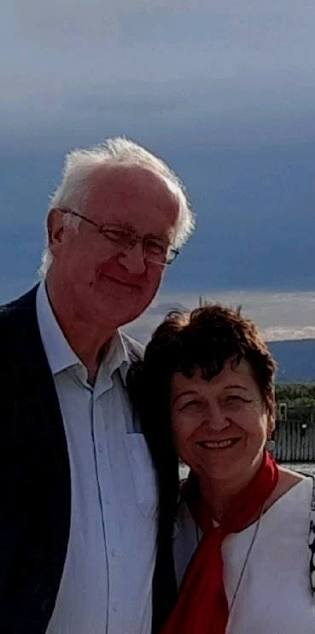
Peter Haider and his wife, who has been a steadfast supporter of his work and UPF’s international activities. (Photo: UPF)
Peter Haider is a peace activist and President of the Universal Peace Federation (UPF) Austria. Born in Austria in 1954, he studied Korean culture and language in South Korea and established the “Forum Religion und Weltgestaltung” in 1984 to promote dialogue and understanding among different religions.
Since 2002, he has served as President of UPF Austria, leading more than 300 peace education programmes, cultural events, discussion forums and international conferences in Vienna, including programmes at the UN Office in Vienna.
He has also established the International Association of Parliamentarians for Peace and the Interreligious Association for Peace and Development in Austria.
PROMOTED
In recent years, Russian President Vladimir Putin has become the focus of many controversies in international politics, in the press - media and the public around the world. The reason, everyone knows, is that he defied international opinion to restore Russia, his "obsession for power", his dealings with Crimea, Ukraine, and Syria...
WAJ
- Chairman Kwon Sung Taek: When Art and Memory Shape Vietnam–Korea Diplomacy
- ENTREPRENEUR LE TRUONG SON: PROPELLING VIETNAMESE ENTERPRISES TOWARDS GLOBAL RECOGNITION
- Respiratory Medicine Congress in Vienna warns of long-term exposure to air pollution and lack of green spaces
- TALKSHOW HUNG KING’S 64: THE MOSAICS OF THE KING XV

MOST VIEWED
-
1
The World International Press Freedom Day was celebrated at the United Nations in Vienna

-
2
Vietnam’s Golden Autumn Fair 2025: A Global Showcase of Culture, Creativity, and Commerce

-
3
Golden Autumn Fair 2025: Connecting Trade, Showcasing Excellence, and Elevating Global Products

-
4
Secretary-General António Guterres: Remarks at Joint Press Conference with the President of Austria, H.E. Alexander Van der Bellen
.jpg)
-
5
Writer Nguyen Khac Phuc - show of a philosopher

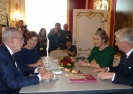
The two Kings Philippe and Van der Bellen havedifferent backgrounds, one is of royal origin, and the other is a child of a refugee family (once of noble origin) but now, in the eyes of the European public, both of them are giving off a sense of courtesy, virtue and erudition.
WAJ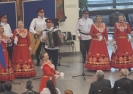
With the attendance of many international figures, the 80th anniversary of the end of World War II was celebrated at the United Nations headquarters.
Journalist Usama Soliman

Comment