





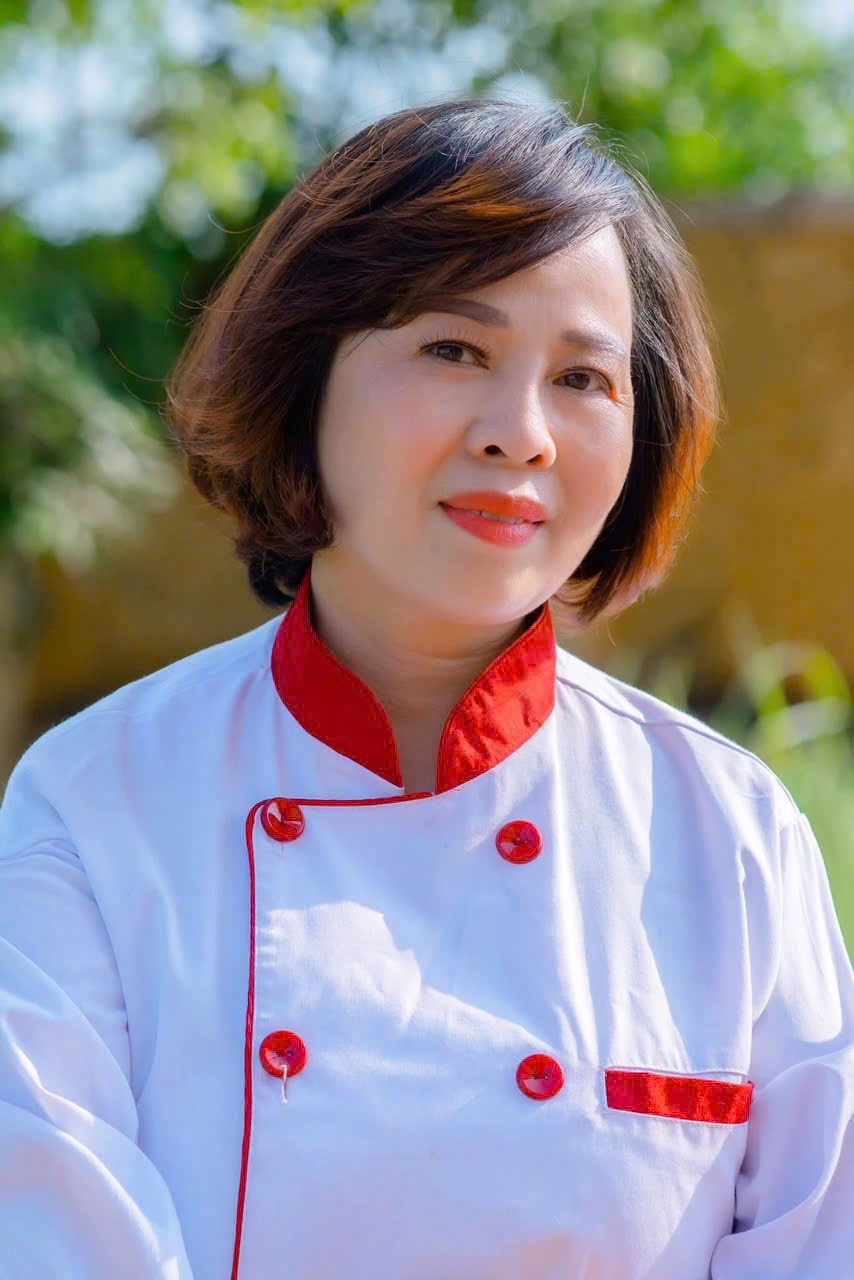
Lê Thị Thiết—an internationally recognized Master Chef, founder of the “Phở Xưa Nam Định” brand, Vice President of the Vietnam Culinary Culture Association, and Chairwoman of the Nam Định Culinary Culture Association. (Photo: Courtesy of the subject)
When phở is mentioned, Hanoi often comes to mind. But among culinary professionals, Nam Định is widely regarded as one of the most important cradles of Vietnamese phở. From modest bowls of clear broth, fragrant with beef bones and charred ginger, phở has been preserved across generations of families and lineages, becoming an inseparable part of Vietnam’s cultural life.
Today, phở is no longer just a dish. It is memory, identity—a “cultural passport” that Vietnamese people carry with them into the world.
WAJ: How did “Phở Xưa Nam Định” take shape and evolve?
Master Chef Lê Thị Thiết: Nam Định is one of the birthplaces of Vietnamese phở. With a history spanning hundreds of years, Nam Định phở has been preserved and passed down within a craft village community across four to five generations. What sets it apart is that here, phở is not merely a profession—it is a shared passion. Nearly every household can cook phở, yet each retains its own closely guarded secret.
Our greatest challenge is not a lack of ingredients or technique, but preserving authenticity in a constantly changing world. Many elderly artisans remain hesitant to pass down their craft. To earn their trust, we must be patient and demonstrate that sharing does not diminish value—it ensures its longevity. In my view, “preserving phở is not about keeping a recipe, but preserving its soul.”
WAJ: In your view, what defines an authentic bowl of Nam Định-style phở?
Master Chef Lê Thị Thiết: A truly great bowl of phở lies not in complexity, but in perfect harmony. There are four essential elements: noodles, broth, meat, and spices.
The broth is the soul - it must be clear, naturally sweet from simmered bones, and fragrant with star anise, cinnamon, and cardamom. The meat must be fresh, tender, and properly prepared. The rice noodles should be supple, yet not overly soft. And the spices, though subtle, ultimately determine the depth of flavor. Phở is a symphony - each component must play its role in perfect balance.
WAJ: After being honored as an international Master Chef in Singapore in 2024, what steps have you taken to bring phở to the world?
Master Chef Lê Thị Thiết: The title is both a source of pride and a weight of responsibility. I came to realize that I represent not only myself, but the cultural identity of Vietnamese phở as a whole.
We are now working toward a larger goal: positioning Vietnamese phở as a global heritage, not merely a dish.
To do so, we must standardize recipes, build a coherent cultural narrative, develop product ecosystems, and connect with international communities. As I often say, “We do not sell a bowl of phở - we tell a story of Vietnamese culture.”
WAJ: What has been the response from international audiences when you introduce “Phở Xưa Nam Định” abroad?
Master Chef Lê Thị Thiết: Whenever we present Phở Xưa Nam Định internationally in countries such as Thailand, Malaysia, Dubai, or France, we always accompany it with cultural storytelling, including artistic traditions, craft village heritage, and especially culinary culture. We share its origins, its stories, and its distinctive flavors.
International audiences often respond with surprise: “So this is Vietnamese phở.” They come to understand that it is not merely broth and noodles, but a complex blend of more than a dozen spices, along with a unique culinary culture and way of enjoying it.
For overseas Vietnamese, especially those from Nam Định and Hanoi, each bowl carries the essence of home, drawing them emotionally closer to their roots. Many express pride in seeing Vietnamese phở introduced in the countries where they live.
“Where there is phở, there is Vietnam,” they often say at such gatherings.
I have witnessed people in their seventies and eighties arrive in wheelchairs simply to experience the aroma and taste of phở, overwhelmed with emotion. Some have told me that after 55 years, they were finally able to rediscover the flavor of their childhood.
In that sense, the taste of phở becomes something deeply preserved—part of one’s cultural identity carried abroad. For many, phở is not just food, but a way to hold onto memories of home and a longing to return.
WAJ: How do you balance tradition and modernity?
Master Chef Lê Thị Thiết: Integration does not mean losing identity. But to integrate, we must standardize.
From the rice used for noodles to the bones used for broth, to spices such as cinnamon and star anise everything must meet international standards. Fish sauce and salt, though seemingly simple, are in fact the cultural essence. Without them, phở would no longer be truly Vietnamese.
WAJ: Is “fusion phở” an opportunity or a challenge?
Master Chef Lê Thị Thiết: If the core values are preserved, it is an opportunity. Phở can adapt to different countries and palates.
But one principle must remain: its form may change, but its identity must not.
WAJ: How can technology and AI support the preservation of phở?
Master Chef Lê Thị Thiết: Technology enables us to tell the story of phở more powerfully. It allows practitioners to confidently introduce their culture to the world.
AI cannot replace human hands, but it can help traditional values travel further.
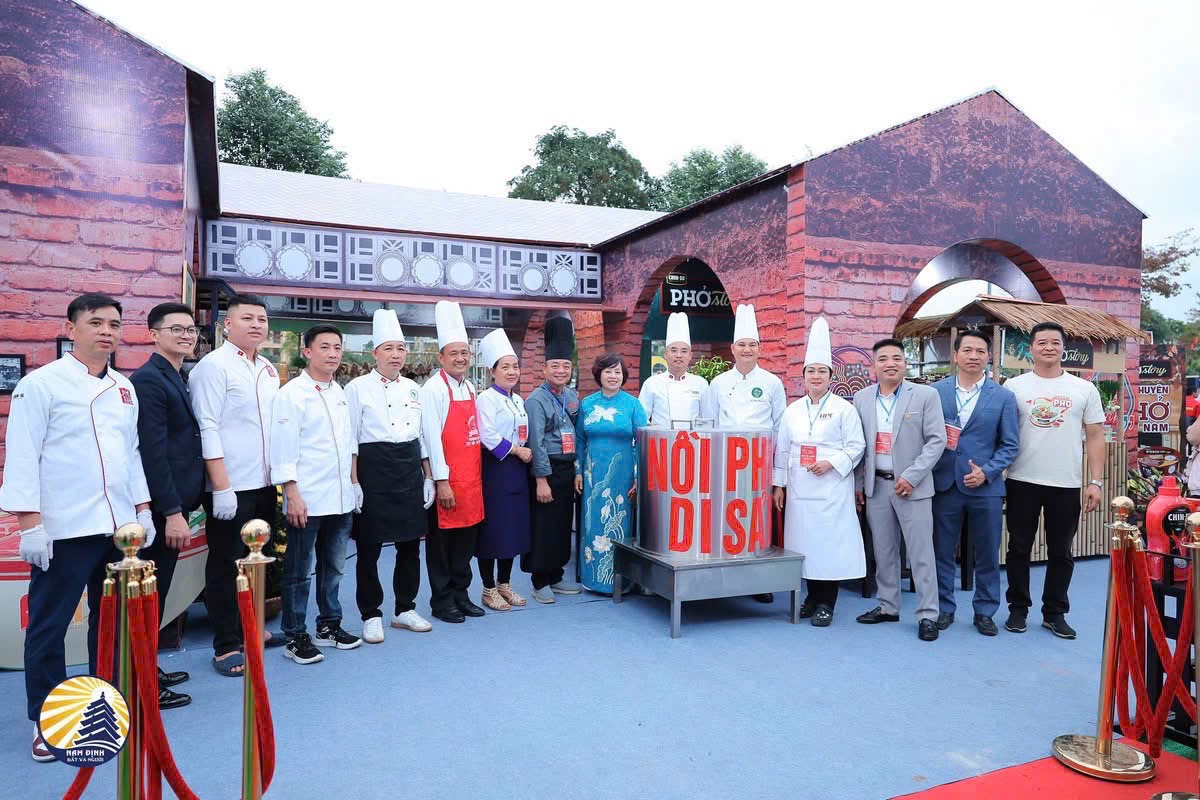
Lê Thị Thiết is among the pioneers working to standardize, preserve, and bring Vietnamese phở to the global stage, with the long-term goal of having it recognized as an intangible cultural heritage of humanity. (Photo: Courtesy of the subject)
WAJ: What role does phở play in promoting Vietnamese culture?
Master Chef Lê Thị Thiết: Phở is a cultural ambassador. Through a single bowl, one can gain insight into history, customs, and even the character of the Vietnamese people.
For sustainable development, phở should be viewed as an ecosystem: agriculture (rice, spices), craft villages (fish sauce, salt), culture (stories, traditions), and economy (exports, branding).
WAJ: What are your directions for collaboration with overseas Vietnamese communities?
Master Chef Lê Thị Thiết: In the context of globalization, Vietnamese phở has become widely present across many countries, emerging as a highly recognizable culinary symbol. However, its development remains fragmented, lacking standardized foundations and a unified positioning.
We therefore aim to strengthen multilateral cooperation among overseas Vietnamese communities, international businesses, and domestic professional organizations to build a cohesive and sustainable phở ecosystem.
Key priorities include standardizing core elements such as ingredients, processes, and flavors; developing a national-level identity and cultural narrative; and promoting initiatives toward recognition of phở as a UNESCO intangible cultural heritage.
At the same time, “packaging” phở should not be limited to physical products, but must also encompass folk knowledge, cultural values, and community identity.
“Phở is not just a dish, but a cultural expression that must be preserved, standardized, and systematically promoted.”
WAJ: What policies do you hope governments and international organizations will adopt?
Master Chef Lê Thị Thiết: Phở is not merely a dish but an intangible cultural heritage, embodying folk knowledge and craft techniques. Vietnam has taken important steps by recognizing “Phở Nam Định” and “Phở Hà Nội” as national heritage.
However, stronger and more coordinated policies are needed. It is essential to map the phở ecosystem—from craft villages and artisans to traditional establishments—as a basis for UNESCO nomination dossiers. At the same time, direct support mechanisms must be provided for artisans and practicing communities.
In parallel, value chains must be standardized and developed, linking preservation with economic growth while protecting brands and meeting international standards.
One urgent issue is intellectual property protection. Without timely identification and protection, many culinary values risk being exploited or even redefined on the global market.
“Preservation must go hand in hand with development—and development must include protection.”
WAJ: What message would you like to send to younger generations?
Master Chef Lê Thị Thiết: “I have only one message: practice your craft with integrity, and preserve it with love for culture.” Do not chase short-term profits. See phở as a living heritage, and each practitioner as its guardian.
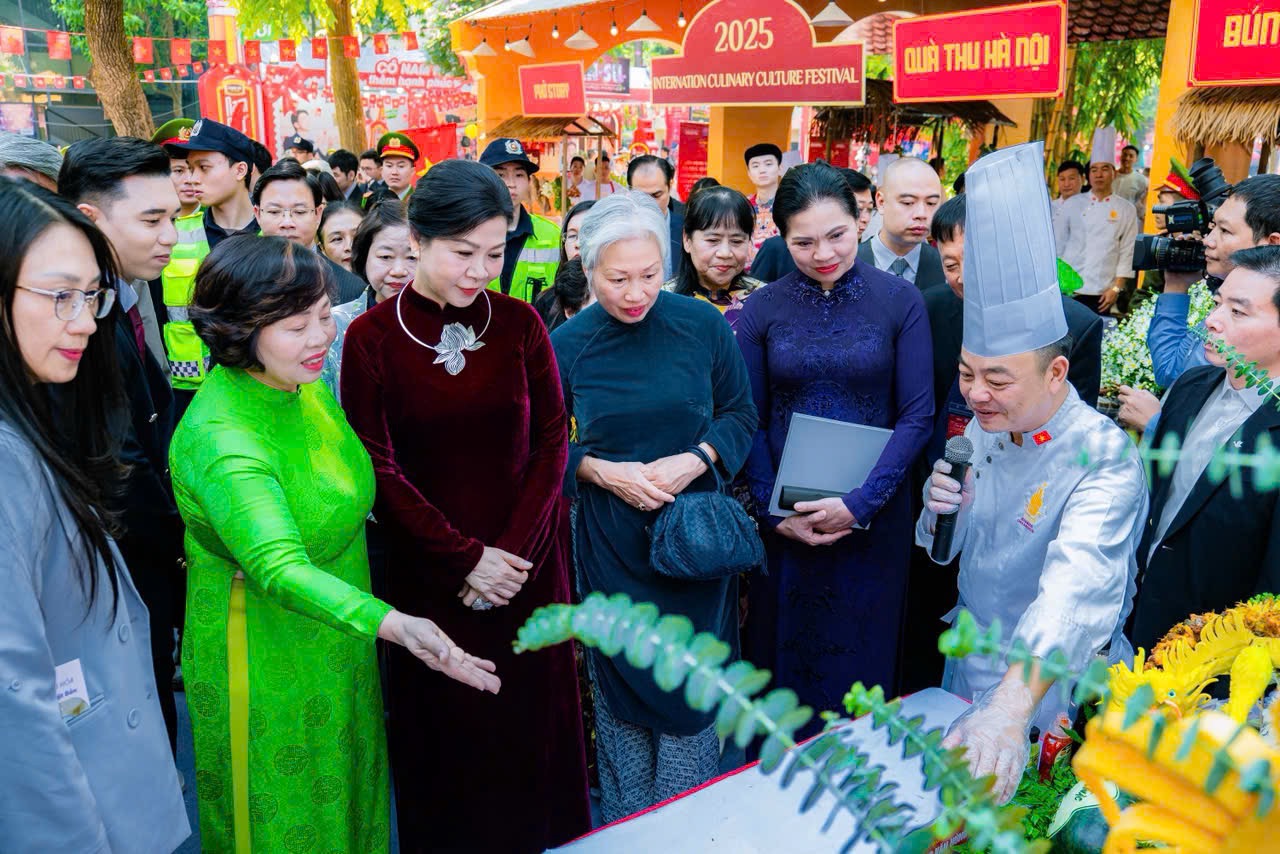
Lê Thị Thiết speaks with Ngô Phương Ly about efforts to preserve Vietnamese culinary culture. (Photo: Courtesy of the subject)
Vietnamese phở has traveled far. Yet to be fully recognized, protected, and authentically represented as a global heritage, a long journey still lies ahead. In an era of constant change, the essential question is not how much phở has evolved—but how much of its Vietnamese soul remains.
Hanoi, April 2026
PROMOTED
Amid Vietnam’s deepening international integration, the Vietnamese community in Europe is increasingly asserting its role as a social bridge and in people-to-people diplomacy. On the occasion of the 11th National Patriotic Emulation Congress in Hanoi, 26–27 December 2025, WAJ spoke with Mr. Giang Thanh, Standing Vice Chairman of the Union of Vietnamese Associations in Europe and the Czech Republic, about the community’s contributions and expectations in promoting Vietnam’s image worldwide.
WAJ- Autumn Fair 2025: A New Destination in the Global Cooperation Network
- Breaking Boundaries: Vietnam's Ancestral Global Day and South Korea join forces for cultural collaboration
- Korean stand at the 68th IAEA General conference 2024
- Podcast: Vietnam's Role in Strengthening EU-ASEAN Development Cooperation


MOST VIEWED


The two Kings Philippe and Van der Bellen havedifferent backgrounds, one is of royal origin, and the other is a child of a refugee family (once of noble origin) but now, in the eyes of the European public, both of them are giving off a sense of courtesy, virtue and erudition.
WAJ
With the attendance of many international figures, the 80th anniversary of the end of World War II was celebrated at the United Nations headquarters.
Journalist Usama Soliman

Comment