





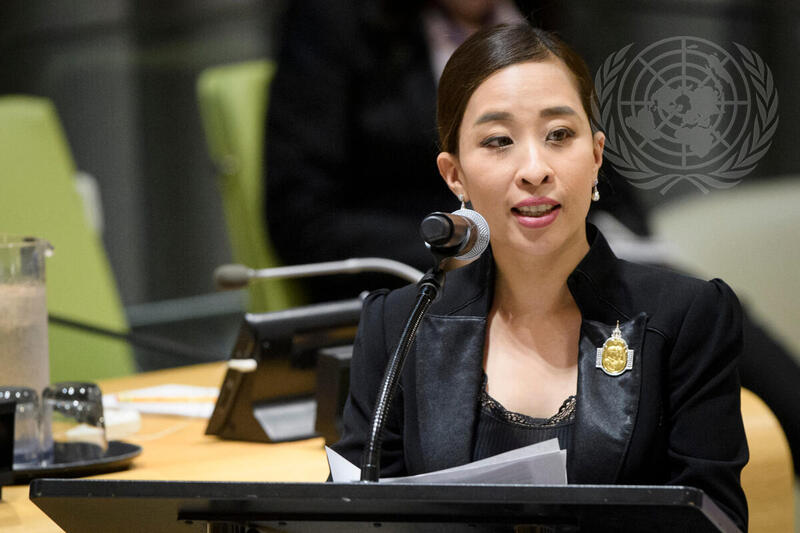
Princess Bajrakitiyabha Mahidol addresses a meeting at United Nations Headquarters in New York. (Photo: Source: United Nations Photo Archive (UN7152706) (Cover: UN7328121)/ Eskinder Debebe [1] [2].
The death of Princess Bajrakitiyabha Mahidol at the age of 47 has brought to a close the life of one of the most remarkable figures of Thailand’s contemporary monarchy. Yet she will be remembered for far more than her royal status. A lawyer, diplomat, and advocate for public service, she dedicated much of her life to bridging the enduring values of tradition with the complex realities of the twenty-first century.
As the eldest daughter of King Maha Vajiralongkorn, Princess Bajrakitiyabha was raised in an environment shaped by duty and responsibility. Rather than confining herself to ceremonial obligations, however, she chose a path defined by scholarship and public service. Trained extensively in law, she served as a public prosecutor before entering the field of international diplomacy a decision that reflected her determination to contribute to society through professional expertise rather than inherited privilege alone.
One of the most significant chapters of her career unfolded in Vienna, where she served as Ambassador Extraordinary and Plenipotentiary of the Kingdom of Thailand to Austria from 2012 to 2014. During the same period, she also represented Thailand as Permanent Representative to the United Nations and other international organizations based in Vienna, one of the world's foremost centers of multilateral diplomacy.
It was there that she engaged in global discussions on the rule of law, human rights, international security, and sustainable development. Those who worked alongside her often spoke of a rare combination: the dignity of royalty paired with the intellectual rigor of a legal professional. She was not regarded merely as a ceremonial figure, but as a thoughtful voice whose contributions were grounded in expertise and genuine dialogue.
Yet Princess Bajrakitiyabha’s most enduring legacy may not lie in the positions she held, but in the people she chose to serve. For many years, she championed judicial reform and advocated for the rights of women within legal systems, particularly female inmates and vulnerable groups often overlooked by society. She believed that justice should not be measured solely by statutes and regulations, but also by the dignity that society affords its most vulnerable members.
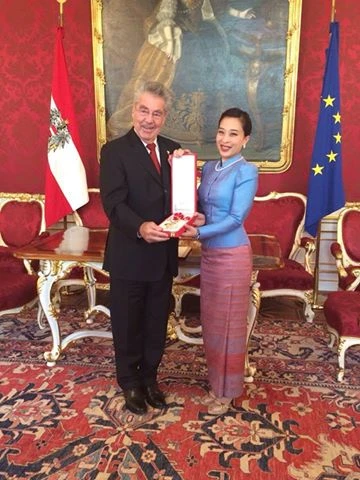
Princess Bajrakitiyabha Mahidol is awarded Austria’s Grand Decoration of Honour in Gold with Sash by President Heinz Fischer at the Hofburg Palace in Vienna. (Photo: Source:Photo of MGR Online (2014) [3].
Those efforts earned her recognition as an influential voice in international conversations on social justice and sustainable development. She embodied a model of leadership that was both compassionate and resolute one in which empathy coexisted with responsibility, and humanity with professional excellence.
Her passing, after nearly four years of illness, has generated an outpouring of grief across Thailand and among those around the world who worked alongside her. For many, this is not simply the loss of a princess. It is the loss of a woman who devoted her life to the ideal of service.
As I watched images of thousands of Thai citizens quietly lining the streets to pay their final respects in recent days, I found myself reflecting on a personal journey of my own.
In 2018, I had the opportunity to join members of the Vietnamese community in a project to install a statue of the Hung Kings in Udon Thani. At the time, many people questioned why Vietnamese communities wished to honor their ancestral founders on Thai soil and in other countries around the world. Such concerns from local residents were entirely understandable.
Yet through dialogue, listening, and sincere exchange, those distances gradually diminished. Vietnamese and Thai communities and indeed people from many other nations came to recognize that they shared a common value: gratitude toward their ancestors, their origins, and those who paved the way for future generations.
Since then, each year on the Hung Kings Commemoration Day, observed on the tenth day of the third lunar month, Udon Thani has become one of the most important gathering places for Vietnamese communities abroad. Whenever I witness these ceremonies, I am reminded of the respect that Thai society extends toward the cultural heritage of another people.
Perhaps that is why, as I observe the affection and reverence that the Thai people have shown for Princess Bajrakitiyabha, I see more than a royal funeral. I see a cultural value that has long been woven into the fabric of this nation: gratitude toward those who have dedicated themselves to the service of their communities and society.
In a world increasingly marked by division and conflict, such scenes evoke a simple yet profound reflection. Peace is not built solely through treaties, diplomatic negotiations, or political agreements. It is also nurtured through memory, respect for history, and compassion from one human being to another.
And perhaps that is what remains with me most deeply when I think of Princess Bajrakitiyabha, of Thailand the Land of Buddhism and of the quiet cultural bridges that continue to connect people across barriers and borders.
For in the end, a person's greatest legacy is not found in the titles they hold during their lifetime, but in the values they leave behind in the hearts of those who remain.
P/S: With gratitude to the United Nations Photo Library and official Thai public sources consulted in the preparation of this article.
1.https://dam.media.un.org/AssetLink/v53f8s764473ttp8aw888q43s8qo7q00
2.https://dam.media.un.org/archive/Secretary-General-with-H-R-H--Princess-Bajrakitiyabha-Mahidol-of-Thailand-2AM9LO5KAE1I.html
3. https://mgronline.com/celebonline/detail/9570000116325?utm_source=chatgpt.com
PROMOTED
This year, Vietnam Ancestral Global continues to engage with organisations, people, associations, foreign communities, intellectuals, scientists, and international friends to organise both offline and online, building on the success of the previous nine years. Vietnam Ancestral Global: Hung King Death Anniversary and Honoring Global Vietnamese Descendants 2024, with the subject of Peace: Ancestral Legacy, will include the following primary activities:
WAJ
- Young translator conquers the ancient Greek classic Anabasis – Memoir of the Persian Expedition
- Austria news - Usama Nosshy channel covers Asean's 55th anniversary celebrations at the United Nations in Vienna
- VietnamPlus Newspaper reported about ASEAN's 55th anniversary at the United Nations in Vienna



MOST VIEWED


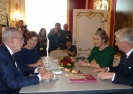
The two Kings Philippe and Van der Bellen havedifferent backgrounds, one is of royal origin, and the other is a child of a refugee family (once of noble origin) but now, in the eyes of the European public, both of them are giving off a sense of courtesy, virtue and erudition.
WAJ
With the attendance of many international figures, the 80th anniversary of the end of World War II was celebrated at the United Nations headquarters.
Journalist Usama Soliman



Comment