





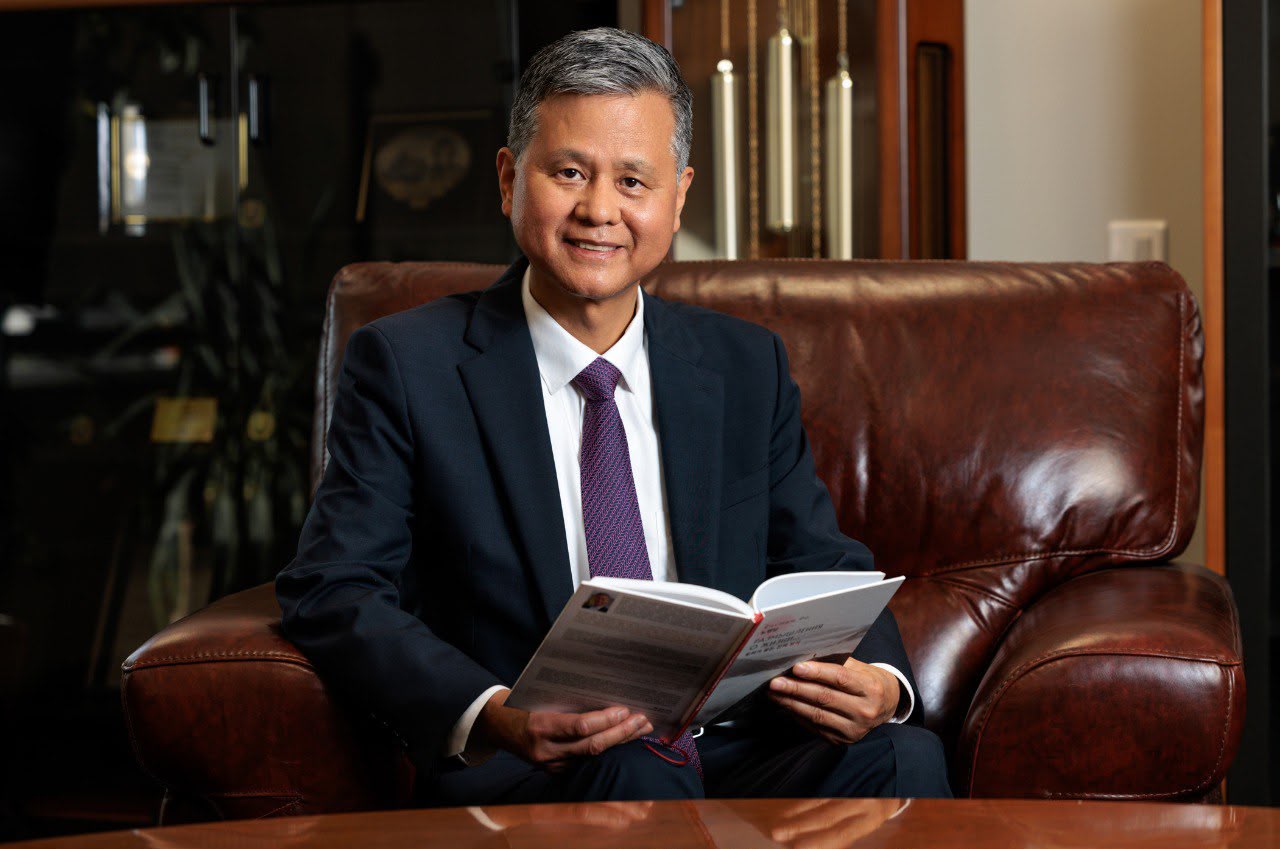
Mr. Youngnam Roh – LG Electronics Advisor, Poet and International Management Consultant. (Photo: https://youngnamroh.com)
Beyond Business: Learning to See the People Behind the Markets
WAJ: You have spent more than three decades working and living across different countries, with a particularly long and meaningful connection to Russia. How has this international journey shaped your understanding of people, cultures and the world beyond the boundaries of business?
LG Electronics Advisor Youngnam Roh: Since joining LG Electronics in 1990, I have spent 36 years working in international business. I have worked in countries with very different histories and cultures, including Russia, Kazakhstan, the United Arab Emirates, Portugal, Hungary and India. At first, I saw the world mainly in terms of markets, products, sales and competition. Over time, however, I began to see the lives of the people behind those numbers. Even when we were selling the same product, people chose it for different reasons. Their ideas about family, their tastes in furnishing a home, and their hopes and anxieties about the future were all different. I learned that understanding a country requires more than economic indicators and market research. It also means understanding what its people value.
My experiences in Russia have stayed with me particularly deeply. When I first took up a posting there in 1996, I encountered the uncertainty of a society in transition. When I returned to lead the business in Russia and the CIS in 2021, my colleagues and I faced the pandemic and the geopolitical changes that followed. Those years made me realize how profoundly changes in relations between countries can affect everyday life.
Despite differences in culture and language, we shared the desire to protect our families, to have our work respected, and to be able to trust someone in difficult times. International business taught me how to work in other countries, while living alongside their people broadened my thinking. Writing poetry today is also a way of reflecting, in my own words, on those people and experiences.
WAJ: When you first took up your posting in Russia in 1996, your primary mission was business development. Over time, however, Russia became much more than a place where you worked. What experiences or encounters transformed this professional relationship into a deeper personal and cultural connection?
LG Electronics Advisor Youngnam Roh: I first took up a posting in Russia in 1996. At the time, my priority was to develop an unfamiliar market and establish a foundation for the business. Russian society was undergoing profound changes after the collapse of the Soviet Union, and I was a young businessman expected to deliver results amid that transformation.
I remember a Russian driver who worked with us asking why Korean expatriates did not go to theatres, concert halls or art museums. His question made me reflect on how much I really knew about the country in which I was living. It also made me think about the difference between the Russia I encountered through business and the Russia I could discover through literature and the arts.
As I became more familiar with performances, visual art and literature, I began to see people's emotions and historical memories differently. In Russia, even the president recites poetry at official meetings and events. That gave me the impression that literature lives beyond the pages of books: it remains a language through which society shares ideas and feelings.
I was also struck by the billboards in Moscow carrying declarations of love, such as ‘I love you!’, or messages wishing someone a happy birthday. There was something tender and warm about expressing affection for one person in the middle of such a vast city.
The wide landscapes, the birch trees changing with the seasons, and the colleagues with whom I shared difficult times gradually became part of me. Russia became part of my life. That is why its landscapes and people's faces still come to mind after my return to Korea. My affection for Russia grew out of many years of shared life.
WAJ: You adopted the Russian name Yuri, inspired by the legendary cosmonaut Yuri Gagarin. What did Gagarin represent to you when you made that choice, and does his spirit of exploration continue to influence the way you approach life today?
LG Electronics Advisor Youngnam Roh: To me, Gagarin was a pioneer who ventured where no one had gone before. I chose the Russian name Yuri because I, too, wanted to be someone who opened a new path.
Building a business in an unfamiliar country involves uncertainty. You have to learn the language and customs, meet people and earn their trust, and work through problems that do not yet have answers. Of course, I would not compare my experience with the magnitude of Gagarin's journey into space. What has stayed with me is his curiosity about the unknown and the courage to take a step forward despite fear.
My poem ‘Yuri Gagarin’, inspired by the monument to him on Moscow's Leninsky Prospekt, is especially meaningful to me. Looking at the monument, I reflected on how difficult it is to be a pioneer and on the hopes I had invested in the name I chose.
I still need that spirit of exploration. For someone who had spent so many years in business, writing poetry and reading it before an audience was another new challenge. However much experience I gain, and however old I become, I hope to retain the openness of a beginner. The name Yuri is a small promise to myself to keep looking beyond the world I already know.
When Poetry Becomes a Language of Cultural Understanding
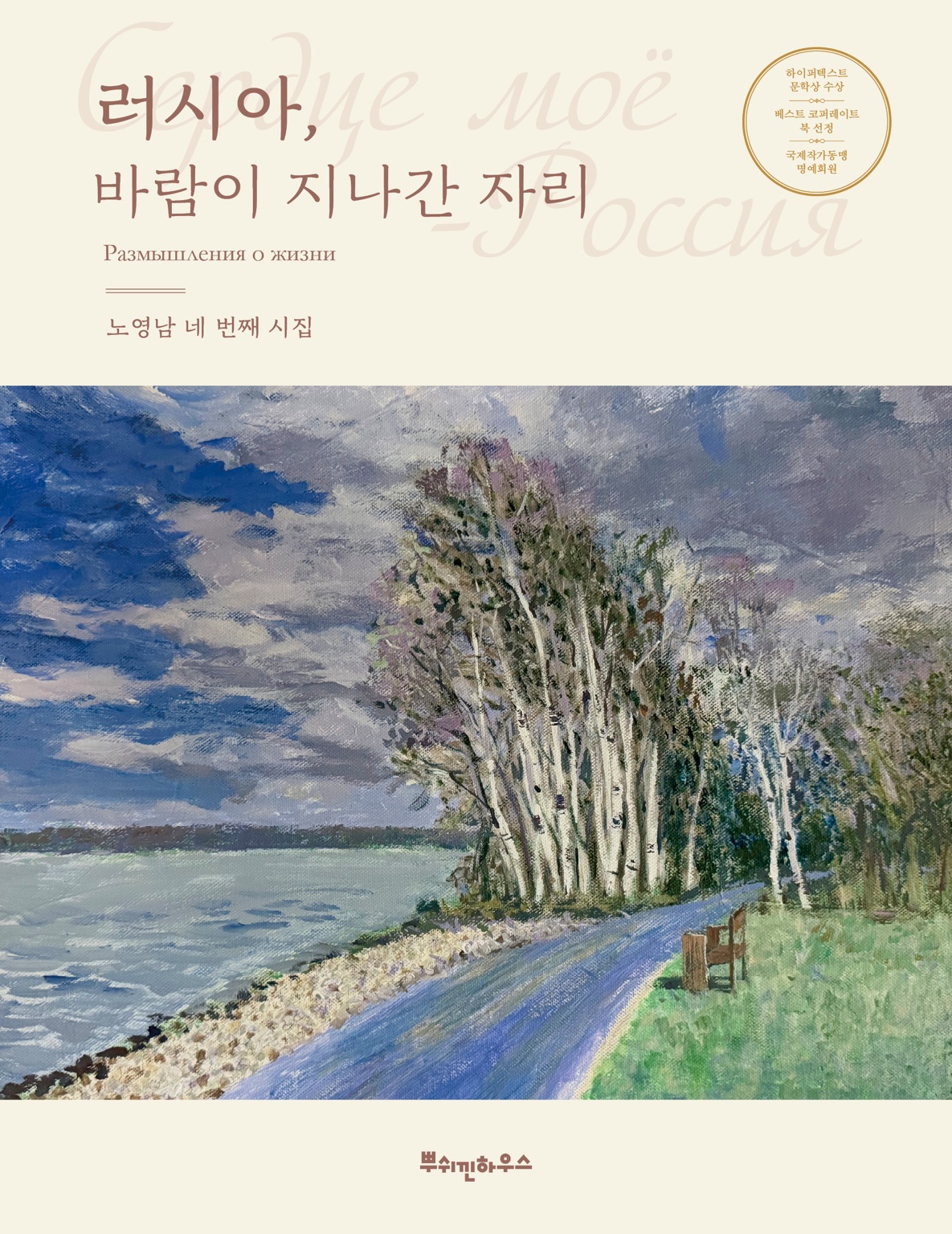
One of Youngnam Roh’s poetry collections, featuring cover artwork painted by his wife.(Photo: https://youngnamroh.com)
WAJ: Your literary journey has brought together Korean and Russian languages and cultural perspectives. What inspired you to begin writing poetry, and what do you hope readers from these two countries will discover through your work?
LG Electronics Advisor Youngnam Roh: Poetry began as a way to express experiences and emotions that had accumulated over many years. In business, I had to focus on competition and survival, performance and responsibility. Yet the language of management could not fully convey the people I met on business trips, the awe I felt in nature, or the emotions that came from going through difficult times together.
Receiving a collection of Rasul Gamzatov's poems in Dagestan was an important turning point. It made me want to write about my own experiences in my own voice. I write mainly free verse in Korean, and Russian translations allow those poems to reach Russian readers.
The changing seasons of the birch trees outside my home also became a subject for my poetry. Watching their leaves emerge in spring, turn golden and fall in autumn, and their bare branches gather snow in winter, I found myself reflecting on the changes in my own life. The cover of my latest collection, Russia, Where the Wind Has Passed, features birch trees painted by my wife.
The ‘wind’ in the title represents the landscapes, people and history I encountered while travelling through Russia, and the feelings and memories those experiences left within me. After returning to Korea, I wanted to keep alive the sense of expansive courage and awe I had felt in the Caucasus, Altai and Kamchatka, as well as the love I had shared with people. The words ‘Russia, My Heart’ on the cover express that same feeling.
For Korean readers, I hope to convey the Russia I came to know through living there. For Russian readers, I hope to show how familiar landscapes and ways of life have been received through the eyes and heart of a Korean. Translation may not carry every nuance of the original, but I believe the feelings of love and loss, solitude and hope can reach people across languages.
WAJ: Your experience in international business has given you a close view of how countries and societies interact. In your view, what can cultural understanding achieve that economic cooperation and official diplomacy alone cannot?
LG Electronics Advisor Youngnam Roh: Economic cooperation and official diplomacy are essential foundations of relations between countries. Cultural understanding influences how the people involved in those relationships see one another. When we learn what brings others joy and what causes them pain, our understanding of them changes.
A contract needs clear terms and responsibilities, but a lasting relationship also requires an effort to understand the other person's position and feelings. Discovering the memories a society carries through a novel, a poem or a performance can help us make that effort. It encourages us to pause before judging one another's actions too quickly.
I often think of the opening sentence of Tolstoy's Anna Karenina: ‘Happy families are all alike; every unhappy family is unhappy in its own way.’ I try replacing ‘family’ with ‘company’, ‘society’, ‘country’, or even ‘humanity’. That makes me consider what we need in order to be happy together.
Of course, one sentence cannot answer every question. For me, it is an invitation to look carefully at the different circumstances of unhappiness while reflecting on the trust, respect and care we need to live together. Literature brings such questions into our own lives. I believe the understanding that grows from this can give economic cooperation and diplomatic relations greater depth and durability.
WAJ: Your encounter with the poetry of Rasul Gamzatov, particularly The Cranes, has been described as an important influence on your literary journey. What moved you most about this work, and how did it change your perception of poetry and its ability to connect people across national and cultural boundaries?
LG Electronics Advisor Youngnam Roh: When I was younger, I often heard ‘The Cranes’ in the Korean television drama Sandglass. At first, it was the sadness in the melody and the singer's voice that stayed with me. Only later did I learn that Rasul Gamzatov had written the poem on which the song was based.
Years later, during a business trip to Dagestan, a local business partner gave me a collection of Gamzatov's poems. I had never expected a business trip to bring me to the place where a song I had heard in Korea had its origins. I was struck by the way a poem born in one region had travelled through another language and through music to reach people in a distant country.
What moved me most was the image of those who had not returned from war becoming white cranes in the sky. That way of remembering the absent, and holding longing within a single image, touched me deeply. It made me think again about how I had felt the sadness of the song even before I fully understood its language.
One May, while walking along Tverskaya Street in Moscow, I heard ‘The Cranes’ during the Immortal Regiment procession. This is a voluntary public demonstration in which people carry portraits of relatives who performed heroic deeds during World War II, commemorating them and keeping their memory alive. That day, the song I had known in Korea carried a different weight.
Those experiences helped inspire me to write about my own life in my own voice. A poem begins with one person's particular memory, yet a reader may discover a memory from their own life within it. That meeting is the power of poetry that I learned from ‘The Cranes’.
When I received literary awards, including the Gipertext Prize from Literaturnaya Gazeta and an award at the Moscow Literature Biennale from the International Union of Writers, I remembered this poem as a lasting part of my literary heritage.
The Human Values That Sustain Solidarity and Dialogue
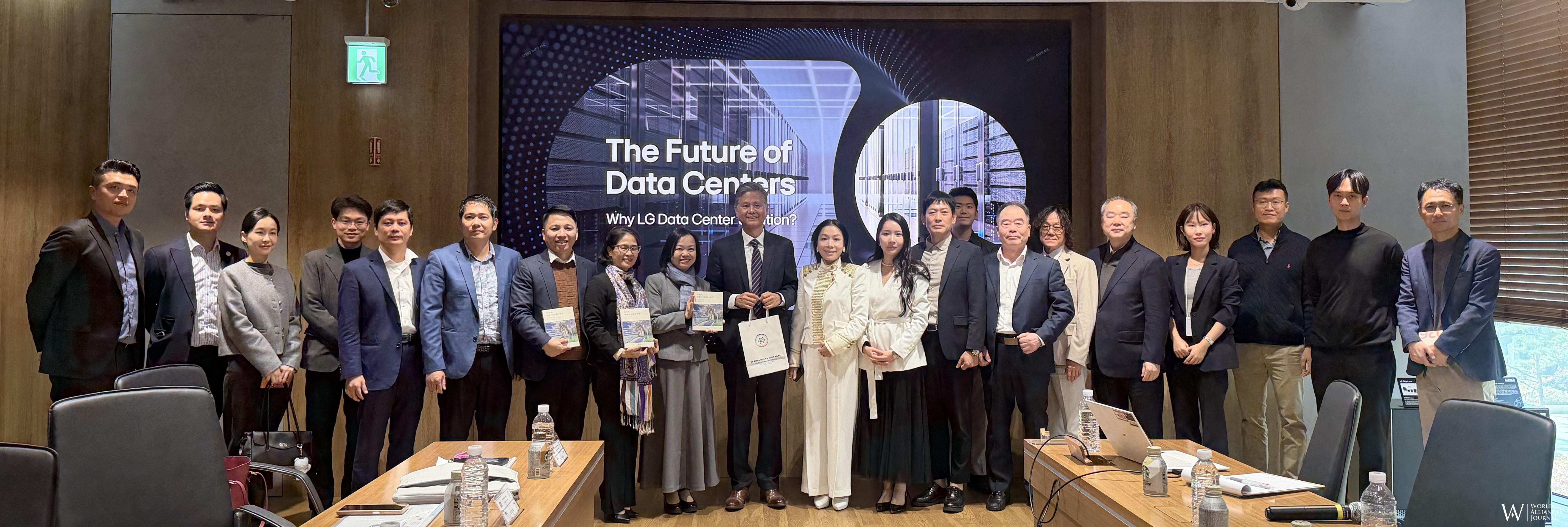
Youngnam Roh (standing at the center), together with LG Electronics representatives, welcomes a delegation from Vietnam’s Ministry of Science and Technology, accompanied by Korean experts, for an exchange on the future of data centers. (Photo: WAJ)
WAJ: You have held senior leadership positions in international business while also pursuing an interest in cultural policy and literature. How do you see the relationship between business success and social responsibility? What obligations, if any, should major corporations have toward the cultural and intellectual life of the societies in which they operate?
LG Electronics Advisor Youngnam Roh: A company must provide good products and services, sustain employment and fulfil its responsibilities. As a professional manager, I have always taken business performance and continuity seriously. In the process, I also learned that a company needs a deep understanding of the society in which it operates if it is to earn lasting trust.
A company's activities affect not only its employees and customers, but also families and local communities. When evaluating its performance, we should therefore consider the relationships and experiences it has helped create in that society. Maintaining the trust of colleagues and customers in difficult times, and expanding opportunities for people to learn and grow, are also connected to a company's future.
The blood donation campaigns, educational activities and cultural exchanges I experienced through LG's work in Russia gave me concrete opportunities to reflect on these ideas. When a company's organizational resources are combined with people's participation, it becomes possible to sustain activities that benefit the community. Respecting the experience of local colleagues and institutions involved in social contribution was particularly important.
I believe contributions to cultural and intellectual life should begin with the same attitude. Companies should listen to the needs of local cultural and educational institutions and artists, and work with them in ways that respect their expertise and independence. There is room for business to help students gain new experiences and to bring literature and the arts closer to people's lives. Studying cultural policy at Moscow State University was part of my effort to understand these experiences in a wider context. I continue to think about how cooperation between business and culture can move beyond a single event and leave something meaningful in people's lives.
I was once happy to read a poem at the Pushkin Museum and the Mariinsky Theatre. We also invited younger generations to share these values. This is how art, creative communities and young people can go hand in hand.
WAJ: Through your involvement in initiatives related to voluntary blood donation, education and cultural exchange in Russia, you have experienced different dimensions of social contribution. What have these experiences taught you about human solidarity, and which values do you believe should transcend national borders?
LG Electronics Advisor Youngnam Roh: Blood donation made me think in very concrete terms about what it means to contribute to another person's life. I gave blood four times in Russia, and in one of my poems about this noble act, I included the quotation: ‘Time spent in the donation queue is not wasted.’ I remember being the only foreigner donating blood during the COVID-19 pandemic. I also gave an interview at a special COVID-19 headquarters centre about the importance of never stopping this activity.
I also experienced moments of connection through education and cultural exchange. Tatiana Shakhnes, who was responsible for public relations and social contribution at LG Electronics in Russia, worked hard to convey the meaning and emotion of my poems to Russian readers. She also created opportunities for me to read my poetry at schools, universities, museums, theatres and blood donation events.
I met audiences at places including Moscow State University, the Russian State University for the Humanities, the Pushkin Museum of Fine Arts, the Dostoevsky Museum and the Mariinsky Theatre. Having just published my first collection, I found these occasions daunting, but the audiences' responses helped me understand when the feelings I wanted to convey were reaching them.
I still remember students turning on the lights on their mobile phones as I read ‘Yuri Gagarin’ or poems about Moscow State University. It gave me great encouragement to see people who spoke a different language listening to my poetry and expressing their feelings in return.
These experiences strengthened my belief that valuing life, respecting one another's dignity, and accepting responsibility for helping those in need should transcend national borders. Alongside great declarations, solidarity also grows through caring for the people around us and keeping small promises.
WAJ: At a time when geopolitical tensions and international divisions can make dialogue increasingly difficult, what role can literature, art and people-to-people exchanges play in preserving mutual understanding? Based on your experience between Korea and Russia, what practical lessons might other societies learn?
LG Electronics Advisor Youngnam Roh: When conflicts between countries deepen, it becomes easy to reduce an entire society to a single image. At such times, I believe we need to make a conscious effort to remember the faces and everyday lives of the people who live there. Literature and art allow us to hear an individual voice in a concrete and personal way.
An article introducing my poetry collection in the Russian newspaper Argumenty i Fakty, or AiF, opened with surprise that a foreigner, and a capitalist at that, was writing positively about Russia rather than criticizing it. That reaction made me reflect on how fixed our expectations and preconceptions about one another can become. I wanted to write honestly about the people and landscapes I had encountered in Russia, and the emotions I had felt there.
I do not believe literature and art can resolve a conflict immediately. They can, however, keep channels of understanding open. They can also be regarded as a form of soft power and a diplomatic means of bringing people of different generations together.
Reading, translating and sharing poetry, and bringing students and writers into conversation, preserve opportunities to hear one another's voices. The practical lessons I have learned are to listen before trying to explain others, to avoid judging their historical memories lightly, and to sustain even small exchanges over time. Translation requires careful attention to meaning and emotion. Cultural exchange requires respect for the trust that local colleagues and institutions have built. I believe the kinds of encounters I have experienced between Korea and Russia are possible between other countries as well. We do not have to agree on everything before we can talk. Listening to someone's story all the way through, even when differences remain, can make the next conversation possible.
In 2025 and 2026, when a new award category called ‘Best Corporate Book’ was introduced, the jury considered that corporate books should not be limited to so-called big stories about companies in industries such as mining, shipping, gas and oil. They could also include the experiences and emotions of CEOs.
WAJ: Looking back on your journey from an international business executive to a writer and cultural bridge between Korea and Russia, how would you define the contribution you most hope to make? What would you like younger generations to understand about the importance of looking beyond national borders and recognizing our shared humanity?
LG Electronics Advisor Youngnam Roh: As I said in an earlier interview with the Russian newspaper Literaturnaya Gazeta, I would like to serve as a bridge between Korea and Russia. I hope that the experience and relationships I have built over many years in business, together with the poetry I now write, can contribute to that work, even in a small way.
Looking back, business and literature are connected in my life. As a manager, I saw people's choices and responsibilities at close hand. Through poetry, I am reflecting on feelings I could not fully express at the time. I would like to share both what I know and what I have yet to learn.
To younger generations, I would say: value the opportunity to encounter another country firsthand. Learning its language, reading its literature, visiting its theatres and museums, and listening to its people can gradually turn a place that once seemed distant into a real world of human lives. Those experiences can also help us see our own society and our own lives afresh.
With AI sweeping the world, I would say that young people should start by respecting those who bring meaning to their lives, who evoke emotions beyond the digital world, and who find true heroes in real life. I always say that, as a businessperson who has worked with scientific laboratories and factories, AI is important for business and manufacturing processes, making them faster and enabling the processing of big data. Still, our human intellect and real-life experiences bring a much deeper sense of fulfilment, and Gen Z fully agrees with that.
Looking beyond borders does not mean forgetting who we are. To me, it means knowing our own roots while recognizing that there is something to learn from other people's lives. I hope to carry the courage and curiosity I found in Gagarin's pioneering spirit into the rest of my own life.
The contribution I hope to make does not have to be grand. If someone reads one of my poems and feels a little closer to a person from another country, I believe that encounter has meaning. My hope is to be a bridge for dialogue between Korea, Russia and other countries.
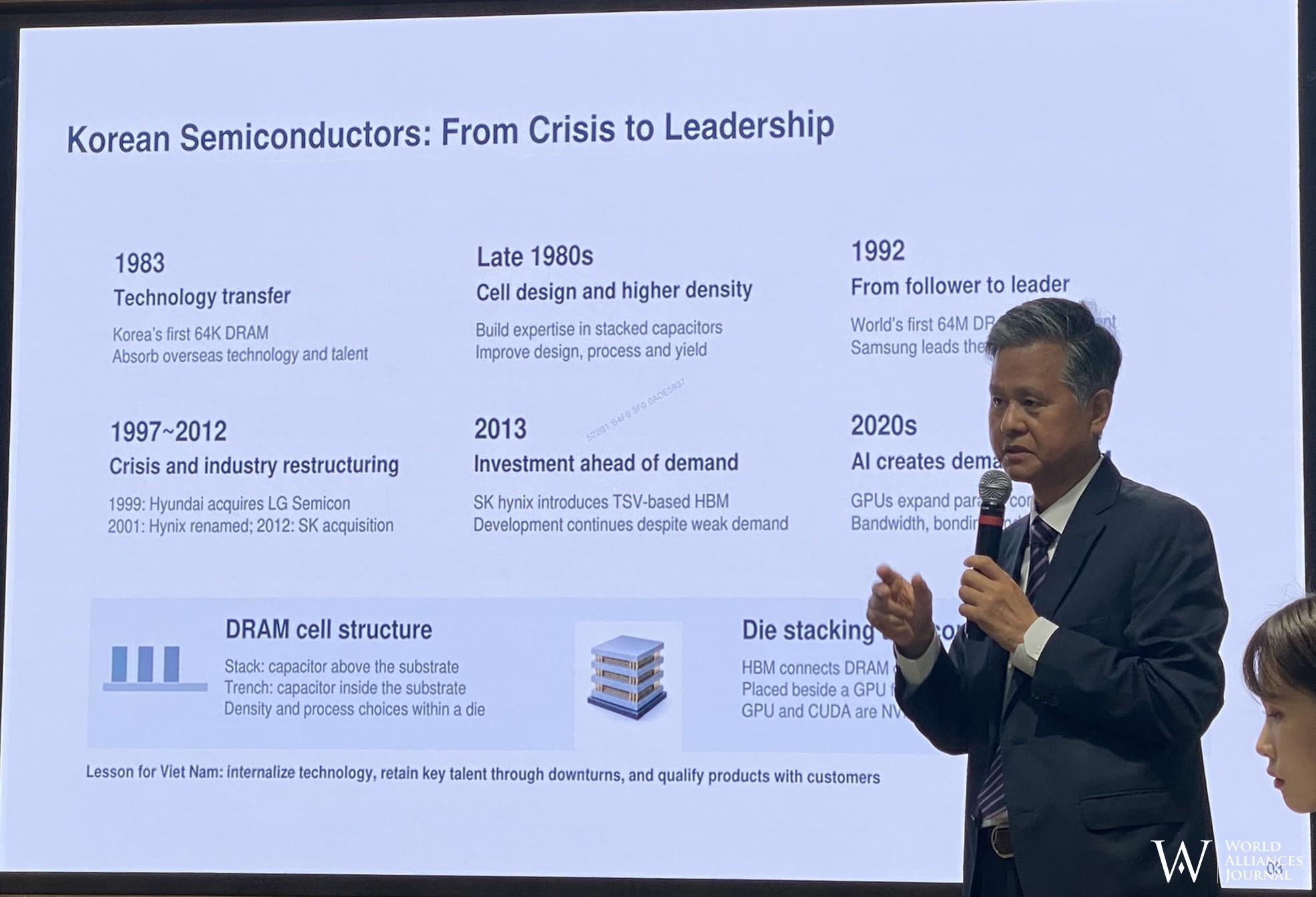
Youngnam Roh presents the evolution of South Korea’s semiconductor industry from crisis to global leadership to an international audience. (Photo: WAJ)
YOUNGNAM ROH
Poet · Business Leader · International Management Consultant
Youngnam Roh joined LG Electronics in 1990 and has devoted 36 years to global management and international business. He held overseas assignments and led local subsidiaries in Russia, Kazakhstan, the United Arab Emirates, Portugal, Hungary, and India. From 2021 to 2025, he served as President of LG Electronics Russia and CIS, contributing to stronger economic cooperation between Korea and the region.
Alongside his corporate career, he has pursued literary work and actively promoted cultural exchange between Korea and Russia. In 2024, he published The True Treasures We Seek through Pushkin House. In 2025, the Russian publisher EKSMO released his Korean–Russian bilingual poetry collection, Reflections on Life.
In August 2025, he received the Special Award for Foreign CEOs and the Best CEO Author Award at Russia’s Best Corporate Book Awards. In May 2026, he won the Hypertext Literary Award in the “Russian World” (Русский мир) category. In September 2026, he became a laureate of the 2024–2026 Moscow Literary Biennale and was appointed an Honorary Member of the International Union of Writers in recognition of his contributions to literary and cultural exchange between Korea and Russia.
He currently serves as an advisor to LG Electronics and continues his work in international business and cultural exchange, with a focus on Russia, Central Asia, the wider Asian region, and the Middle East.
Seoul, South Korea | November 8, 2026
PROMOTED
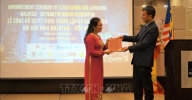
On the evening of August 27, the Malaysia-Vietnam Friendship Association held a solemn ceremony in Kuala Lumpur to announce the decision to establish and launch the Association's Executive Committee.
WAJ

MOST VIEWED
-
1
Vietnamese female director wins prize at amsterdam international documentary film festival 2021

-
2
A New Frontier in Innovation: Vietnam and Austria Expand High-Tech Cooperation

-
3
Connecting Cultures and Commerce: Vietnam’s Golden Autumn Fair 2025

-
4
The Growth of Vietnam's Economy Opens Up Opportunities for German-Vietnamese Economic Cooperation

-
5
Introduction of the book "General Secretary of Vietnam Nguyen Phu Trong" in Korea

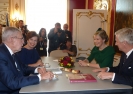
The two Kings Philippe and Van der Bellen havedifferent backgrounds, one is of royal origin, and the other is a child of a refugee family (once of noble origin) but now, in the eyes of the European public, both of them are giving off a sense of courtesy, virtue and erudition.
WAJ
With the attendance of many international figures, the 80th anniversary of the end of World War II was celebrated at the United Nations headquarters.
Journalist Usama Soliman
Comment