





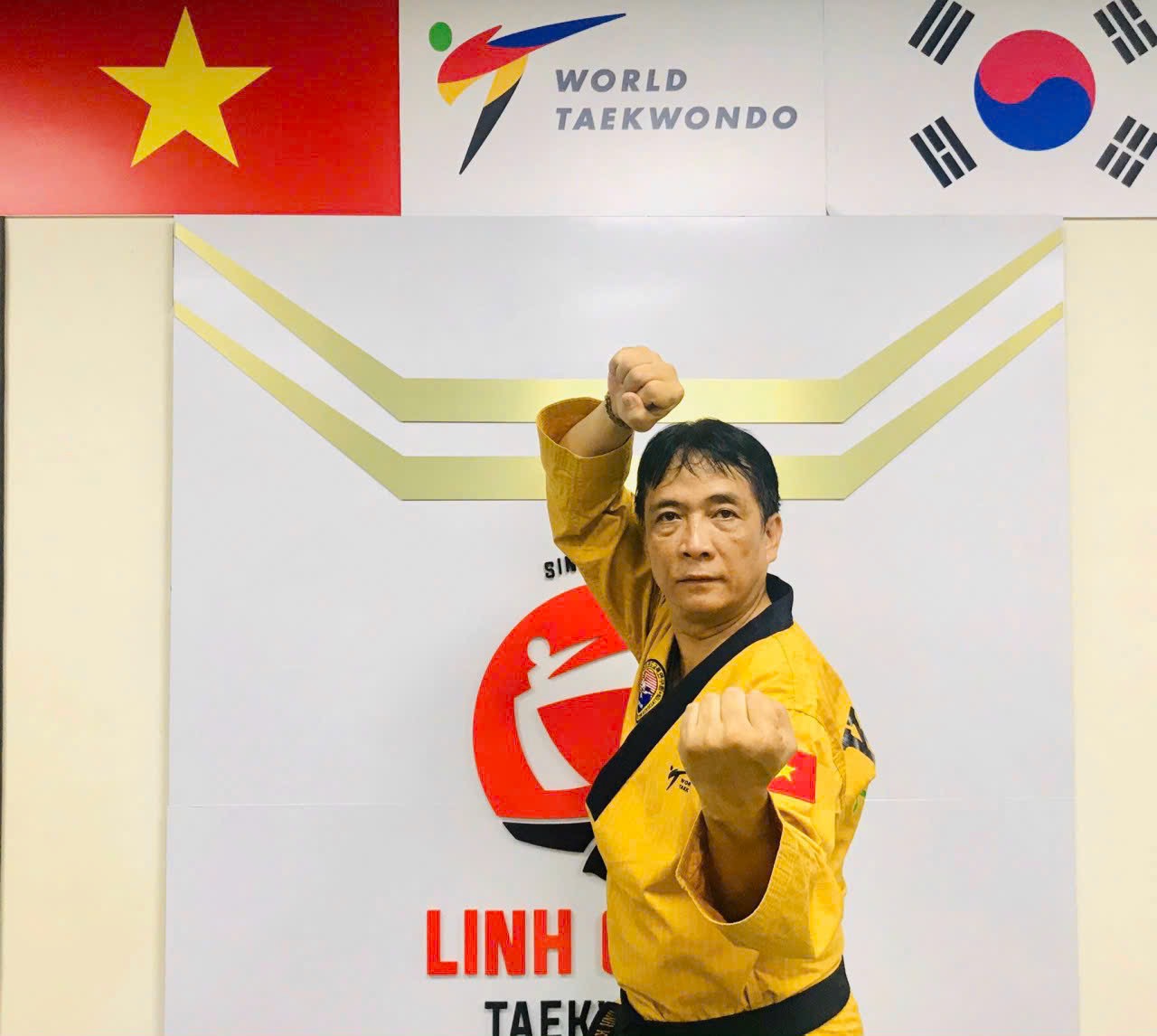
Grandmaster Le Minh Khuong (Viet Nam), Senior Taekwondo Coach, International Referee. (Photo: Courtesy of the subject)
For more than four decades, Le Minh Khuong has devoted his life to Taekwondo as a practitioner, coach and international referee, and as one of those who have witnessed the development of Taekwondo in Vietnam from the 1980s to its place on the world’s Olympic stage.
He has not only trained generations of athletes and martial arts masters, but also helped nurture individuals with knowledge, discipline and a sense of responsibility people who have gone on to contribute to Vietnam and the international community.
He has experienced both ITF and WTF/World Taekwondo, participated in the 8th World Taekwondo Championship in Pyongyang, served as an international referee in Melbourne in 1996, and contributed to the development of Poomsae.
His contributions to Poomsae have also received international recognition. At the 2012 World Taekwondo Poomsae Championships in Colombia, Vietnam won gold in the freestyle team event, while Lê Minh Khương and Korea’s Jae Jin Kang were honored with the Best Coach award.
Yet perhaps the deepest measure of a teacher is not found only in his own titles, but in what happens to the people who pass through his hands.
When martial arts becomes a path in life
One of the stories associated with Le Minh Khuong is the journey of Nguyen Dinh Toan, who would later become a world champion in Taekwondo Poomsae.
When Toan was still a teenager, his small stature made a career in sparring difficult. Khương recognized that another path might suit his student better and encouraged him to move from combat competition to Poomsae.
That decision changed the young athlete’s life.
According to accounts published in Vietnamese media, Khuong not only trained Toan as an athlete but also helped guide him through his personal development and education. Toàn eventually became a world champion and a SEA Games gold medalist.
The story reveals something essential about Khuong’s understanding of martial arts: a teacher’s responsibility is not simply to produce a winner, but to recognize the person standing before him and help that person find the path on which he can grow.
Perhaps it is here that the connection between martial arts and peace becomes most tangible.
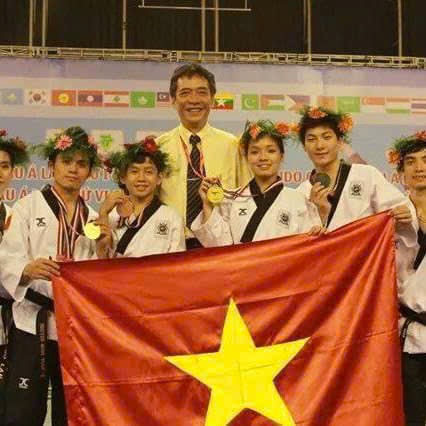
The Grandmaster has trained Nguyen Dinh Toan (first from left) and many other athletes who have become world champions in Taekwondo Poomsae. (Photo: Courtesy of the subject)
Peace does not begin only at negotiating tables. It can begin in a training hall in the discipline of a young person, in respect for a teacher and an opponent, and in the decision to use strength to build rather than destroy.
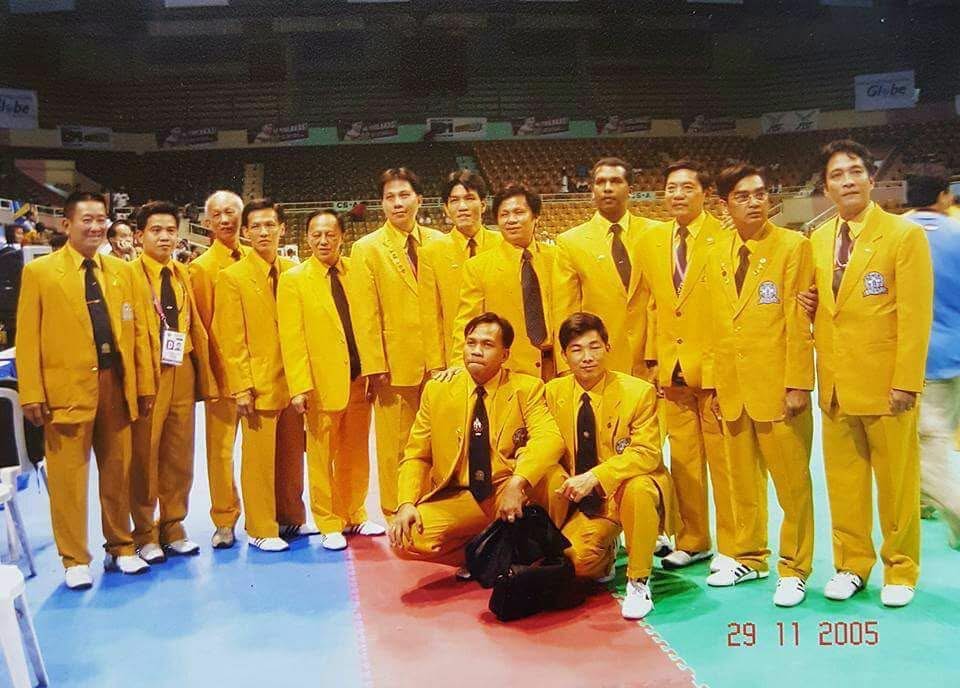
Grandmaster Le Minh Khuong (first from right) with fellow international referees. (Photo: Courtesy of the subject)
Strength must be controlled
After more than four decades in martial arts, Khuong expresses his philosophy simply: “Strength must be guided by discipline, respect and responsibility”.
True strength, he believes, is not the ability to defeat another person, but the ability to control oneself.
Martial arts should never be used to bully the weak. Their strength should serve to protect people, defend justice and preserve peace.
This philosophy is also reflected in the way he understands martial arts education: not simply learning how to fight, but learning how to conduct oneself as a human being.
A global language of respect
Today, Taekwondo has become a truly global language, practiced in around 213 countries and territories, and has been an Olympic sport since 2000.
On the Taekwondo mat, nationality, wealth and social status seem to disappear as boundaries.
“We bow to one another, compete with dignity, and leave as friends”.
For Khương, this is one of the most meaningful possibilities of martial arts: competition does not have to produce hostility. It can create recognition, discipline and friendship.
The bow before a match, therefore, is more than a ritual. It is a reminder that the person standing before you is not your enemy.
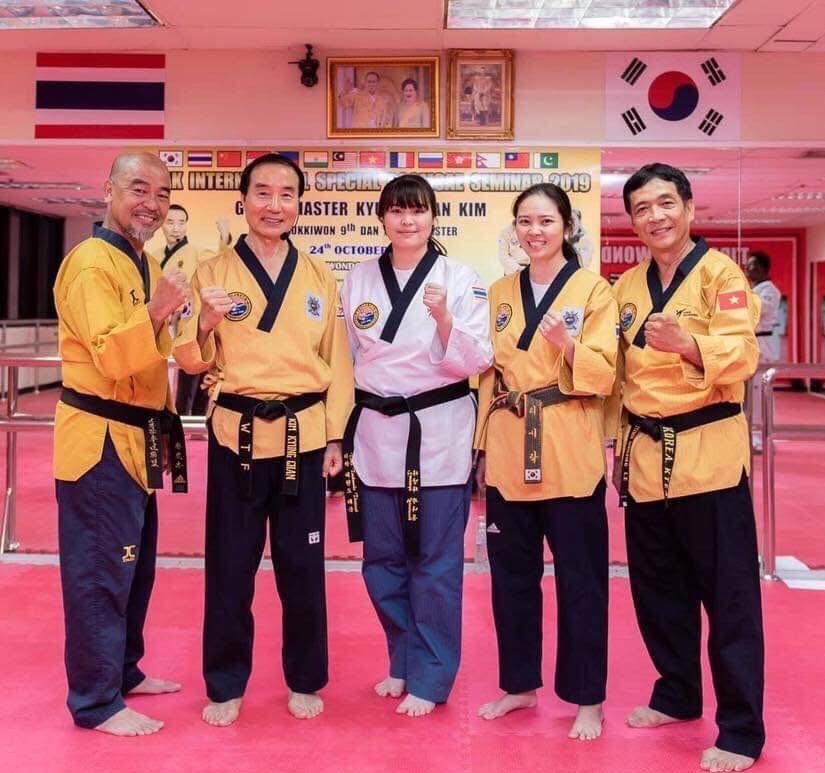
Grandmaster Le Minh Khuong (first from right) with fellow international masters.
(Photo: Courtesy of the subject)
A garden of many martial arts
Le Minh Khuong also believes that the world’s martial arts should not compete to eliminate one another.
Instead, he imagines them as a great garden of many flowers, where Taekwondo, ITF, Vovinam and the traditional martial arts of different nations can learn from one another and contribute to humanity.
This vision is particularly meaningful coming from someone who has experienced different traditions of Taekwondo throughout his career.
For him, difference does not necessarily mean division. Each martial art can preserve its own identity while sharing the values that connect people: discipline, respect, courage, self-control and responsibility.
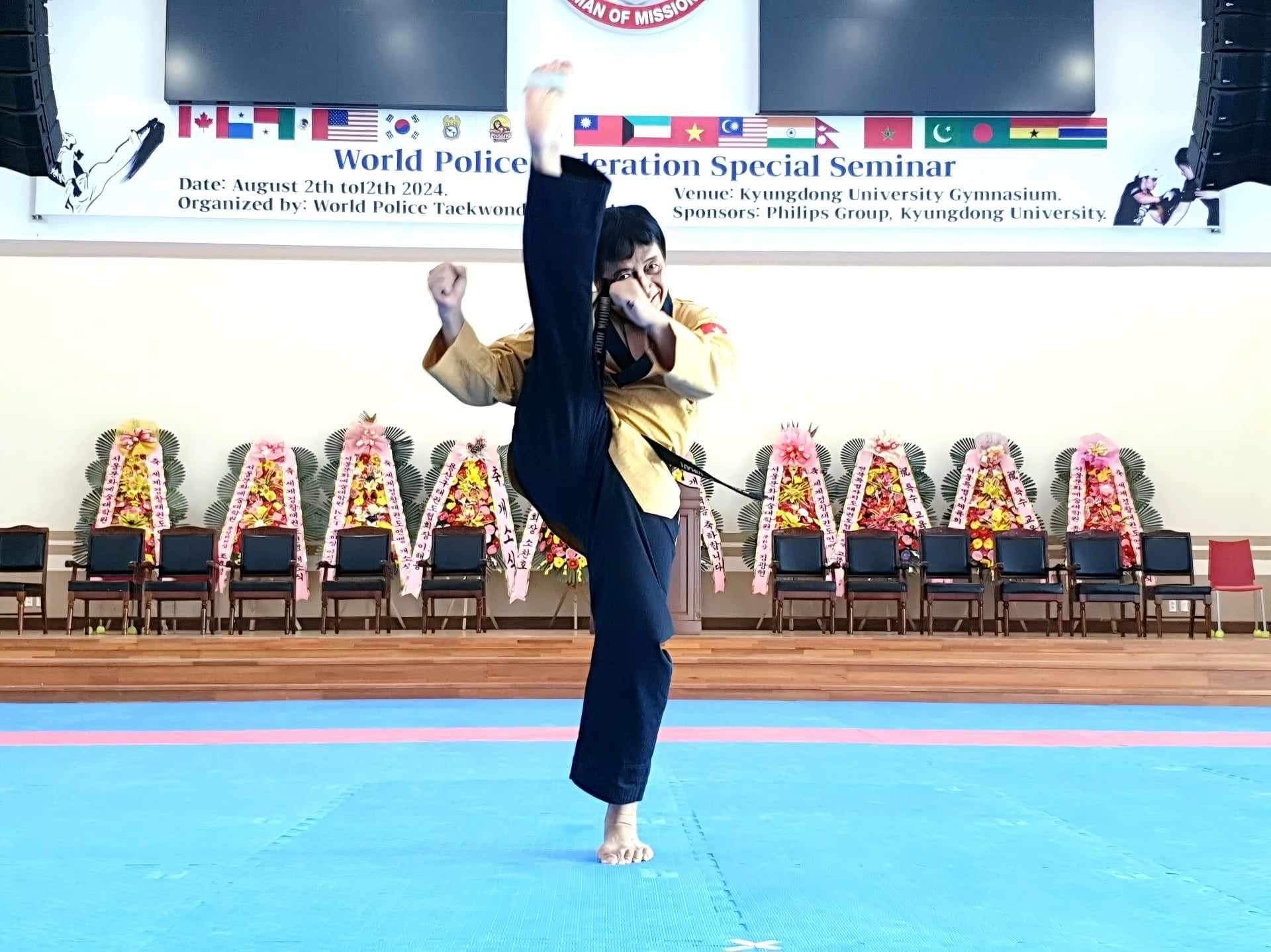
Grandmaster Le Minh Khuong at a training session organized by the World Police Taekwondo Federation (Korea). (Photo: Courtesy of the subject)
From Vietnam, a message of peace
Vietnam is a nation that has experienced many wars. Therefore, Khuong believes, Vietnamese people deeply understand the value of peace.
From Vietnam, he wishes to send a message to the world: “Let the strength of Taekwondo become the strength of peace”.
It is a simple sentence, but one that carries the philosophy of a lifetime.
Strength without responsibility can divide. Strength guided by discipline and respect can protect.
For a martial artist, peace does not mean the absence of strength. It means knowing why strength exists, how it should be used, and when it must be restrained.
That may be one of the deepest lessons martial arts can offer the world.
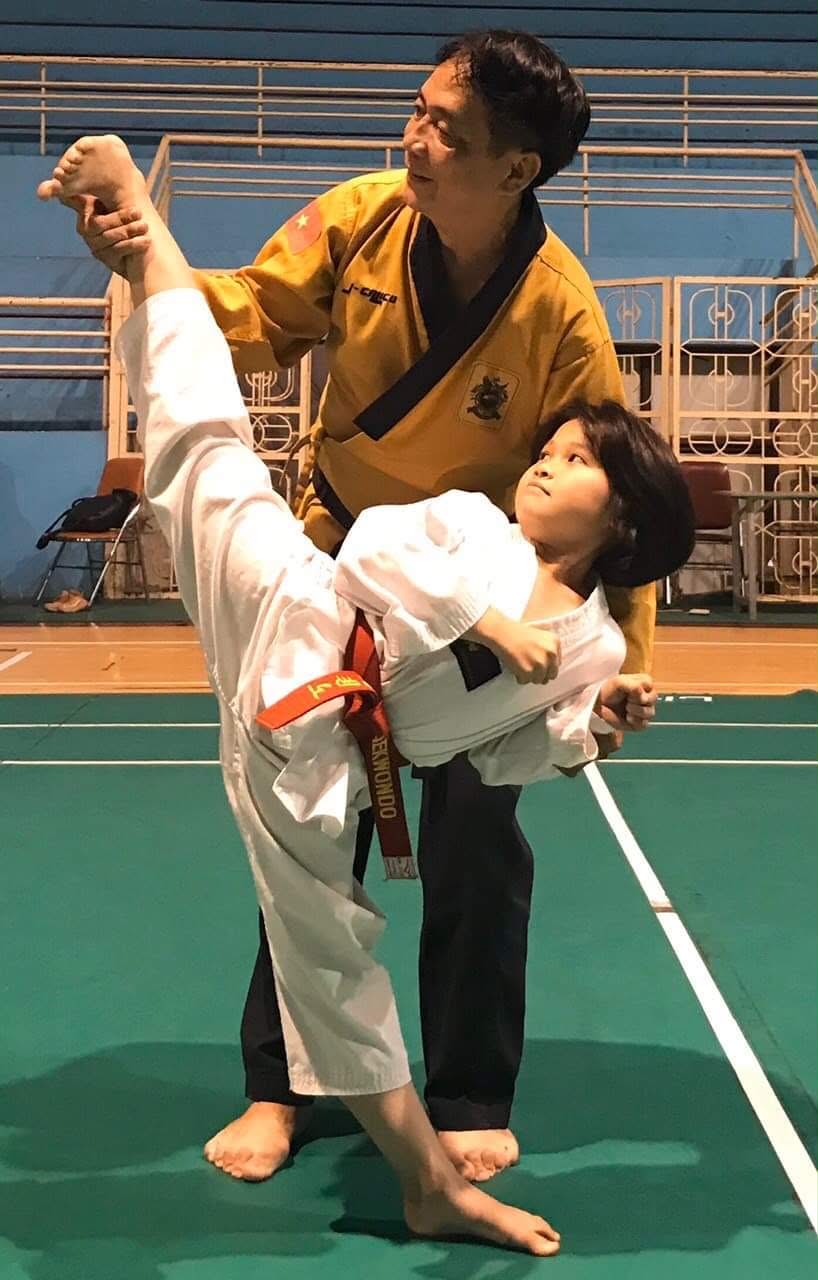
Grandmaster Le Minh Khuong has dedicated himself to discovering and nurturing generations of young Taekwondo talents, helping Vietnamese athletes compete on the world stage. (Photo: Courtesy of the subject)
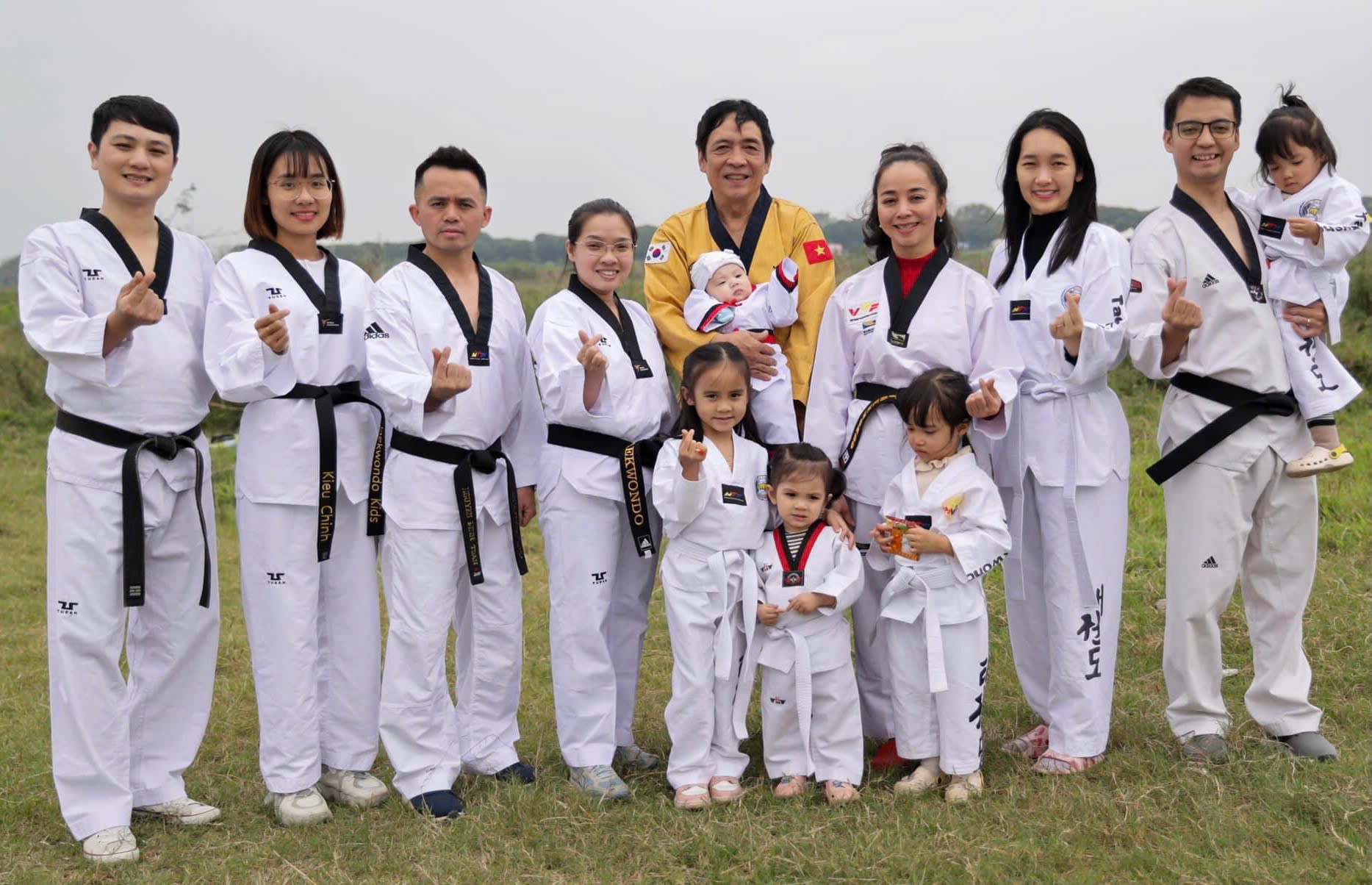
A family devoted to Taekwondo, carrying a shared passion and commitment to the martial art across generations. (Photo: Courtesy of the subject)
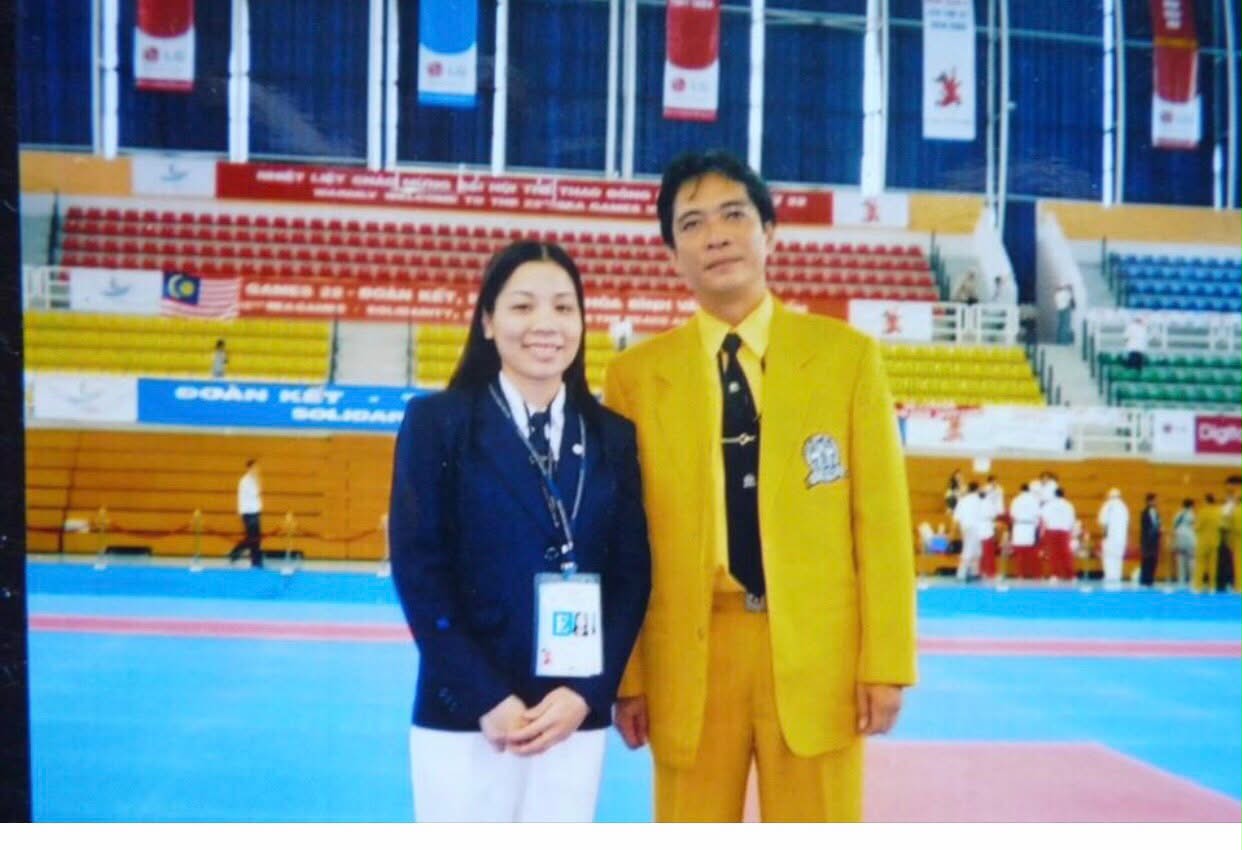
The author with Grandmaster Le Minh Khuong during an international refereeing assignment at the SEA Games (2003). (Photo: Courtesy of the subject)
On the occasion of the International Day of Peace, Le Minh Khuong expresses his sincere thanks to WAJ Magazine, World Taekwondo, ITF, the World Police Taekwondo Federation, and to Taekwondo practitioners around the world who continue to promote friendship, respect and peace.
Dr. Yen Plazt
PROMOTED
Mr. Ho Si Tuan and Mrs. Luong Thi Vi, Thai-Vietnamese entrepreneurs, found success with their VT Naem Nueng brand in Thailand. They moved to Thailand in 1945, raised eight children, and transitioned to the Vietnamese food business in 1986, which has since thrived. Their son, Ho Van Lam, now manages VT Naem Nueng and holds leadership positions in the Business Association of Thai-Viet Nam in Thailand and the Business Association of Overseas Vietnamese. WAJ had the chance to interview him.
WAJ- Taekwondo Grand Masters are never too old to learn
- Austria-Vietnam Cooperation Forum Calls for Focus on Advanced Uses of Artificial Intelligence
- The Arab League Celebrates Eight Decades of Unity in the Heart of Vienna: Renewing Arab Diplomacy, History, and Identity
- Unoosa and partners open next round of applications for microgravity experiments at the Bremen drop tower

MOST VIEWED
-
1
British Ambassador to Vietnam presents his credentials – officially his tenure in Viet Nam

-
2
COOPERATION BASED ON GENUINE FRIENDSHIP

-
3
Harvesting Culture: Vietnam’s Golden Autumn Fair 2025 and the Rise of Soft Power

-
4
Baricco written - the father of the 18th century "Wood trader"

-
5
MP Nguyen Dac Nghiep, a Vietnamese, was elected Vice Chairman in German government

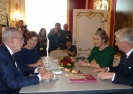
The two Kings Philippe and Van der Bellen havedifferent backgrounds, one is of royal origin, and the other is a child of a refugee family (once of noble origin) but now, in the eyes of the European public, both of them are giving off a sense of courtesy, virtue and erudition.
WAJ
With the attendance of many international figures, the 80th anniversary of the end of World War II was celebrated at the United Nations headquarters.
Journalist Usama Soliman
Comment