



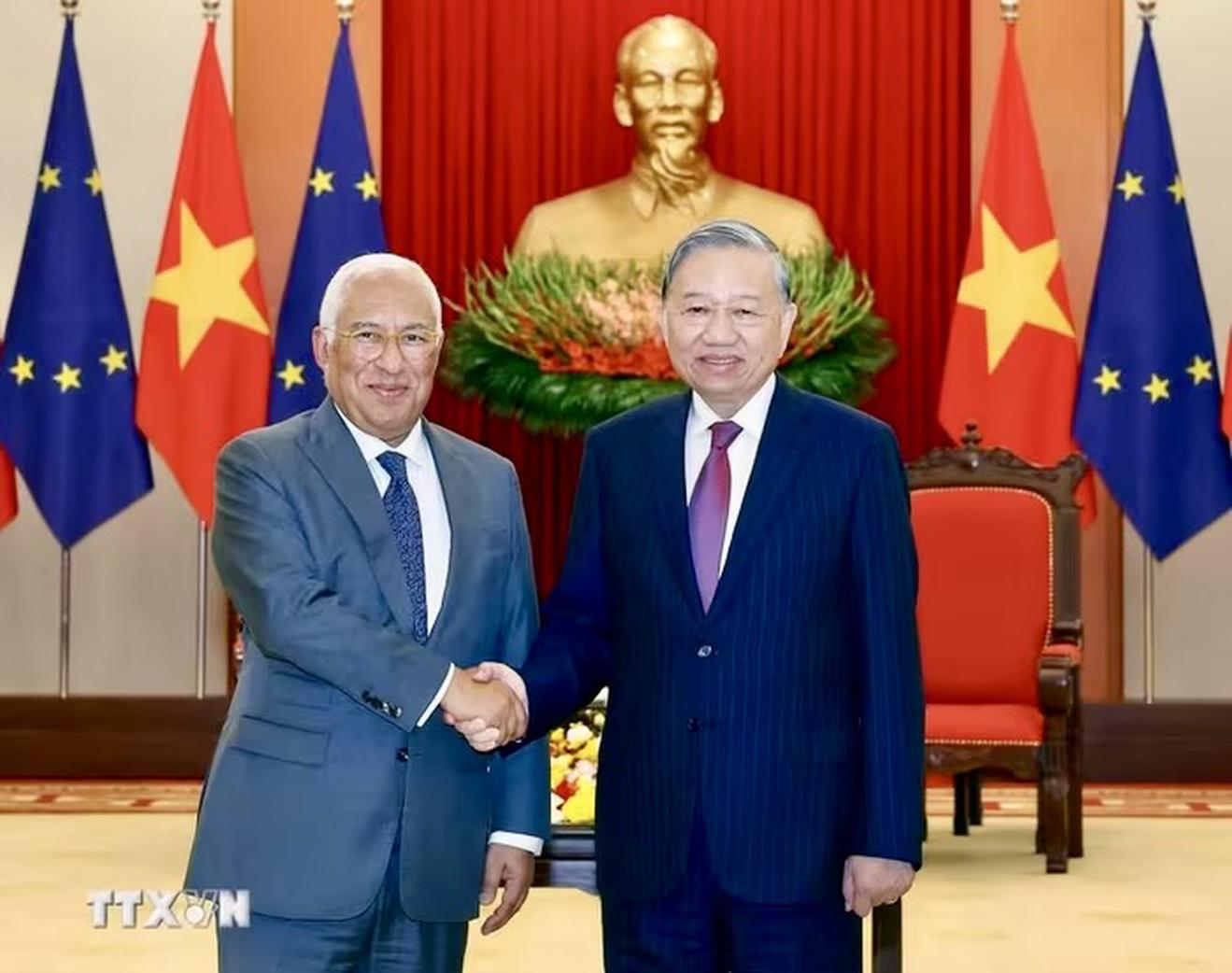
General Secretary and President To Lam and President of the European Council António Costa. (Photo: VNA)
Message of Proactive Integration and New Drivers of Development
A notable feature of General Secretary and President To Lam’s European visit lies not only in his high-level meetings, but also in the breadth of his engagements, spanning royal families, governments and parliaments, as well as businesses, universities, research institutes and local authorities. This approach reflects the increasingly multifaceted nature of Vietnam–Europe relations, which are expanding beyond government-to-government ties to encompass institutions, business communities and academia.
As Vietnam transforms its growth model, the country is seeking additional resources for technology, infrastructure, energy, logistics, education, research and development, and the development of high-quality human resources. These are also areas in which Europe has considerable strengths in technology, capital, governance expertise and high standards of development. This complementarity creates scope for cooperation that goes beyond traditional trade relations and focuses on raising productivity, fostering innovation and improving the quality of growth.
The international economic context further highlights this potential. As global supply chains are being reconfigured towards greater diversification and resilience, Vietnam’s position in Southeast Asia, together with its extensive network of trade agreements, provides favourable conditions for the country to become an increasingly important link in production and economic connectivity between Europe and the Indo-Pacific region. For European businesses, deeper engagement in Vietnam could also help promote technology transfer, human-resource development and higher standards in production, governance and environmental practices.
The foundation for this process has been built over decades, with trade and investment serving as important pillars, particularly with the EVFTA providing a favourable framework for bilateral economic relations. At the same time, Vietnam–Europe cooperation is expanding into green transition, energy, the digital economy, high technology, healthcare, education and scientific research. These areas are becoming increasingly closely linked to shared challenges relating to competitiveness, energy security and sustainable development.
Meetings between General Secretary and President To Lam and the leaders of key EU institutions, including António Costa, President of the European Council, and Ursula von der Leyen, President of the European Commission, are expected to provide additional channels for dialogue on the long-term direction of Vietnam–EU relations. These engagements are expected to place bilateral cooperation within a broader context, linking it to the ongoing transformations in the global economy and technology landscape.
The key message of the upcoming European visit is therefore not simply to expand relations, but to proactively seek forms of cooperation that can simultaneously serve Vietnam’s development and create new opportunities for European partners. A deeper and broader Vietnam–Europe relationship, built on connections among governments, businesses, research communities and societies, could become an important channel through which both sides strengthen their capacity to adapt and generate new drivers of growth in the next phase.
Denmark and the Story of a Forward-Looking Partnership
Within Vietnam–Europe relations, Denmark stands out as an example of how strong political ties can evolve into practical cooperation in emerging areas.
After 55 years of diplomatic relations, Vietnam and Denmark have elevated their bilateral ties to a strategic level and are working to advance the Green Strategic Partnership in a substantive manner. This framework is well aligned with the development priorities increasingly shared by the two countries, including energy transition, emissions reduction, the development of the marine economy, environmental technologies and sustainable growth.
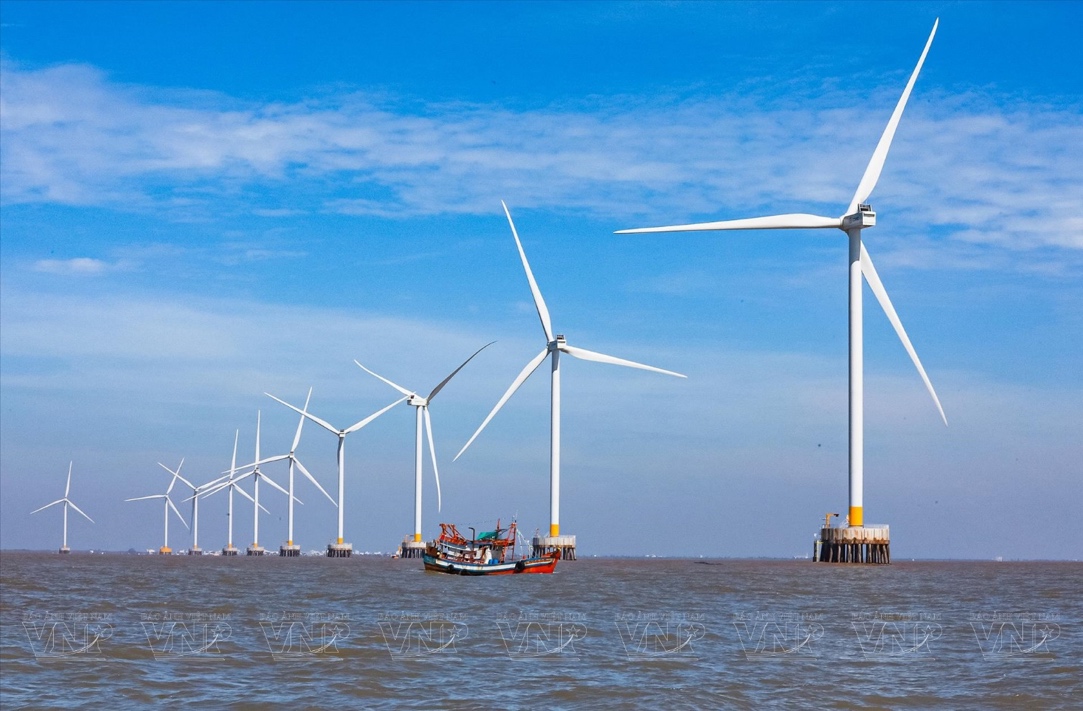
Tan Thuan Wind Power Plant in Ca Mau uses wind turbine equipment supplied by Siemens Gamesa (Denmark/Germany). (Photo: Vietnam Pictorial)
Denmark has extensive experience in renewable energy, environmental technologies and sustainable urban solutions. Vietnam, meanwhile, has significant needs in energy transition, infrastructure development, more efficient use of resources and adaptation to climate change. The relationship between the two countries can therefore be seen as an example of how international cooperation is evolving from “sharing experience” towards “jointly addressing development challenges.”
Notably, General Secretary and President To Lam’s planned engagements with business leaders, academia and local partners in Denmark are expected to broaden the scope of bilateral relations, bringing Vietnam’s development story closer to communities directly involved in investment, research and innovation.
Belgium: Strengthening a Key Gateway to Europe
In Brussels, the high-level programme is scheduled to include engagements with the Belgian state, government and parliament. General Secretary and President To Lam is scheduled to be received by the King of Belgium, hold talks with the Belgian Prime Minister, and meet with the leadership of the Senate and the House of Representatives. These planned engagements underscore the role of parliamentary diplomacy and people-to-people exchanges in building long-term understanding and trust between the two countries.
With its unique position within Europe’s institutional architecture and as home to a number of key EU institutions, Belgium is important not only to bilateral relations but also as a gateway through which Vietnam can strengthen its connections with Europe.
Fields such as science and technology, logistics, healthcare, seaports, energy, sustainable development and human-resource training all offer significant potential for practical cooperation. Vietnam–Belgium relations can therefore contribute to a broader objective: bringing Vietnam–Europe connectivity more directly into the economic and social lives of people on both sides, while helping Vietnam deepen its cooperation and integration into the European economic space.
From bilateral relations with individual partners to Vietnam–EU relations as a whole, General Secretary and President To Lam’s upcoming European visit is expected to have significance that goes beyond the scope of a high-level visit. It reflects the proactive, self-reliant and constructive approach to foreign policy set out at the 14th National Congress of the Communist Party of Vietnam.
A key feature of this approach is the increasingly close alignment between foreign policy and the country’s development strategy. Vietnam is not merely consolidating existing frameworks for cooperation, but proactively expanding its development space and connecting the country with international resources, technology, knowledge and markets.
From Copenhagen to Brussels, the upcoming visit is intended to advance a long-term vision of making relations with Europe a driver of green growth, innovation and enhanced competitiveness. Through these efforts, Vietnam is demonstrating an increasingly proactive and confident position, ready to engage more deeply in cooperative frameworks and contribute to shaping an international environment conducive to peace and development.
PROMOTED
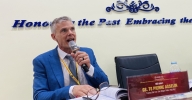
After World War II, Vietnam and the United States briefly stood together against fascism. Soon after, ideological differences set them apart, leading to decades of confrontation. In an interview with WAJ, Professor Pierre Asselin – Professor of History and Dwight E. Stanford Chair in U.S. Foreign Relations at San Diego State University – explains why peace never materialized then, and what lessons still resonate today.
WAJ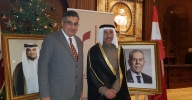

MOST VIEWED
-
1
DR. NGUYEN THANH MY – “THE MAN OUTSIDE THE BOX”

-
2
EMAGAZIN: ANCESTRAL GRATITUDE FOR SUSTAINABLE PROGRESS

-
3
Corazon: vietnam wakes my confidentiality

-
4
ENTREPRENEUR PHAM NGOC CHU: “TRUST IN THE YOUNG VIETNAMESE ENTREPRENEURS IN EUROPE”

-
5
Director General's Statement to the 68th IAEA General Conference

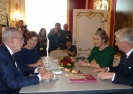
The two Kings Philippe and Van der Bellen havedifferent backgrounds, one is of royal origin, and the other is a child of a refugee family (once of noble origin) but now, in the eyes of the European public, both of them are giving off a sense of courtesy, virtue and erudition.
WAJ
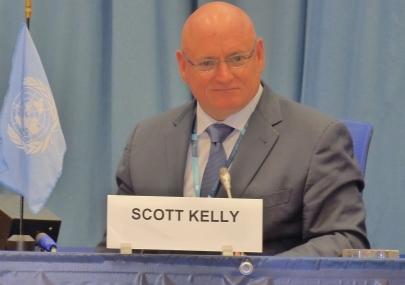
With the attendance of many international figures, the 80th anniversary of the end of World War II was celebrated at the United Nations headquarters.
Journalist Usama Soliman

Comment